
 +1 (213) 715-5368

Vedanshi
2026-11-26
7 min read
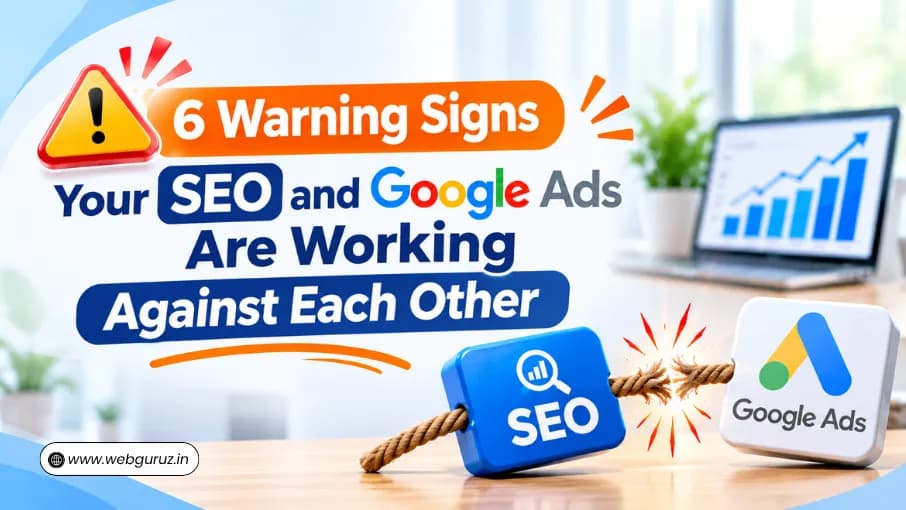
6 Warning Signs Your SEO and Google Ads Are Working Against Each Other
Most businesses buy SEO from one team and Google Ads from another. Each team sends its own report, and each report looks fine.
Read More
Published On:2026-11-26
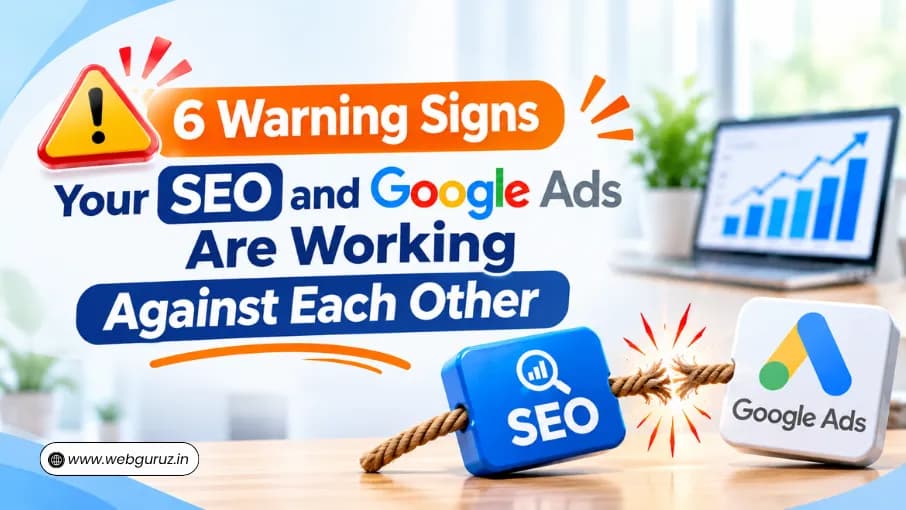
Most businesses buy SEO from one team and Google Ads from another. Each team sends its own report, and each report looks fine. Yet the two often bid on the same searches, chase different goals, and quietly cancel out each other’s work.
That matters more now that both channels share less space on the page. Seer Interactive found that brands cited in Google’s AI Overviews also saw 91% higher engagement on their paid ads. Organic visibility lifts paid results, but only when they are planned together.
Here are six warning signs that your organic SEO services and your Google Ads are pulling in opposite directions, and what to do about each one.
SEO and Google Ads are two ways of showing up for the same search. SEO earns your place in the free, organic results over time. Google Ads rents a place at the top of the page right away. The searcher sees both on one screen and decides in seconds which to click.
When the two are planned together, each one covers the other’s gaps. Ads test which keywords and messages convert, and SEO uses those lessons to build pages that rank for free. SEO shows which pages already win, so ads can spend on the gaps instead.
When they are planned apart, you get the opposite: double spending, mixed messages, and reports that cannot be compared. The space is shrinking too. A 2026 field study of 1,065 US users found that AI Overviews cut organic clicks by 38% on the searches where they appeared. With fewer clicks to go around, no business can afford its own channels competing.

Ads tell SEO which searches turn into buyers. SEO tells ads which pages already win for free. Both report to one scorecard, so budget follows real results.
Check your top-spending keywords. If your site already ranks first for many of them, you may be paying for visitors who would have clicked your organic listing anyway. This is called cannibalization: one channel eats the results of the other.
Brand searches are the usual culprit. As one October 2026 analysis of branded search explains, paid ads often recapture clicks your organic listing had already earned, and the dashboard reports it as growth.
Brand ads are not always a waste. They can block competitors who bid on your name. The fix is to test, not guess:
Your SEO report celebrates traffic and rankings. Your ads report celebrates clicks and cost per lead. Neither tells you how many real customers came in, or which channel deserves more budget next month.
The problem gets worse when each team counts leads its own way. The ads team may count every form fill, while sales only counts calls that turn into quotes. A buyer who clicks an ad, leaves, then returns through Google a week later may be counted twice, or credited to the wrong team.
The fix is one shared scorecard. Agree on a single definition of a lead, track both channels in the same tool, such as GA4, and review results in one meeting. Strong Paid Advertising Services report on leads and revenue alongside clicks, and they share data with your SEO team so both sides chase the same goal.
Search for your main service and look at your ad and your organic listing side by side. Does the ad promise “free quotes in 24 hours” while the organic page talks about something else entirely? Do the prices, offers, or even the business name differ?
Mixed messages make buyers hesitate, and a hesitant buyer often clicks a competitor instead. It also happens behind the click. Many ads send visitors to a thin landing page, while the stronger, better-ranked page on the same topic sits unused.
To fix it:
Your ads account holds a goldmine called the search terms report. It shows the exact words people typed before they clicked and bought. Your SEO team has its own goldmine in Google Search Console, which lists the searches where your pages already appear.
In most businesses, neither team ever sees the other’s data. That means the SEO team may spend months ranking for words that never convert, while the ads team pays for searches your site could easily win for free.
A simple monthly swap fixes this. The ads team shares the 20 search terms with the most conversions. The SEO team shares the pages that sit just off page one. Each side then adjusts its plan. If nobody owns that process, independent SEO strategy & consulting services can set up the data sharing, decide which channel targets which keywords, and keep both teams on one roadmap.
Search no longer means ten blue links. AI Overviews and AI Mode now answer many questions directly, and ads appear inside those answers too. As of November 1, 2026, Google lists 12 countries where ads can show in AI Overviews and AI Mode, including the US, Canada, Australia, and India. Existing Search, Shopping and Performance Max campaigns join automatically, and advertisers cannot switch this placement off on its own.
That changes how both teams should work. Your ad copy now has to fit a conversational answer, while your SEO pages need clear, quotable facts that AI tools can cite.
Voice search pushes the same way. A spoken answer gives the buyer one result, not a page of ads and links to scroll. If your pages don’t answer questions in plain sentences, with prices, hours and service areas stated clearly, you miss both the spoken answer and the AI summary. That is why Google voice search optimization now belongs in the same plan as your ads and SEO.
Open your Google Ads location settings, then look at which regions your website actually ranks in. They often don’t match. The ads may target three cities while the site ranks nowhere near them, or SEO may bring traffic from regions you never advertise to and cannot serve.
This gap wastes money on both sides. Ads in a new market send visitors to pages written for a different audience, with the wrong currency, spelling, or contact details. Meanwhile, organic visitors from strong regions never see a follow-up ad.
The fix starts with one shared list of target locations, ranked by value:
If you sell across borders, the problem doubles, because each country needs its own pages and signals. An experienced international SEO company can line up your country pages with your ad targeting, so both channels pull toward the same markets.
Use this table as a quick health check. If most of your answers fall in the middle column, your channels need a joint plan.
| Area | Working against each other | Working together |
|---|---|---|
| Keywords | Ads bid on terms you already rank first for | Ads cover gaps; SEO covers proven winners |
| Reporting | Two reports with different numbers | One scorecard based on leads and revenue |
| Messaging | Different offers in ads and organic listings | Same offer, tone and proof everywhere |
| Data | Search terms and Search Console stay separate | Monthly keyword swap between teams |
| AI and voice | Nobody owns these answers | Clear facts for AI; ad copy fits conversations |
| Locations | Ads and rankings target different regions | One shared list of target markets |
Fixing all six at once can feel heavy, especially for agencies that handle SEO well but lack a full paid search team. Partnering with White Label PPC Experts lets an agency offer managed Google Ads under its own brand, while keeping SEO and paid search under one roof and one plan.
SEO and Google Ads are not rivals. They are two halves of the same search results page. When they run apart, you pay twice for the same clicks, send buyers mixed messages and lose sight of what actually brings in customers.
Start with the easiest fix: put both teams’ numbers into one report and hold one monthly meeting. Then work through the signs above one at a time. Within a quarter, you should spend less on wasted clicks and see clearly which channel grows your business.
No. Paying for ads does not raise or lower your organic rankings. The harm is financial: you may pay for clicks your organic listing would have won anyway.
Not without testing. Brand ads can block competitors who bid on your name. Pause them for a few weeks, track total leads from both channels, and decide based on the results.
Ads bring leads quickly, while SEO builds lasting traffic over months. Many businesses run ads first to learn which keywords convert, then invest in SEO for those same terms.
At least once a month. Share top-converting search terms, pages close to page one, and any changes to offers or prices.
Yes, in selected countries. As of November 2026, Google lists 12 markets for ads in AI Overviews and AI Mode, including the US, Canada, Australia and India.
Vedanshi
2026-11-26
7 min read
Most businesses buy SEO from one team and Google Ads from another. Each team sends its own report, and each report looks fine.
Read More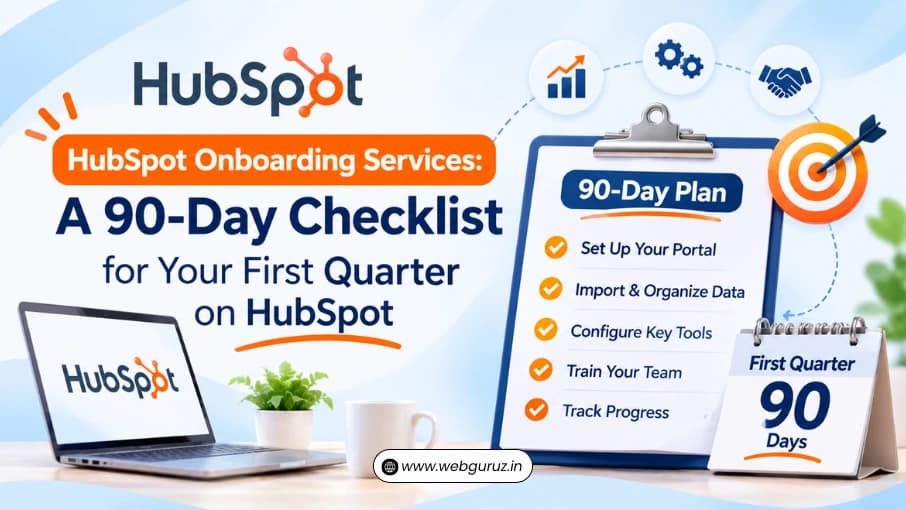
Vedanshi
2026-11-24
7 min read
Signing the HubSpot contract feels like the finish line. It is actually the start.
Read More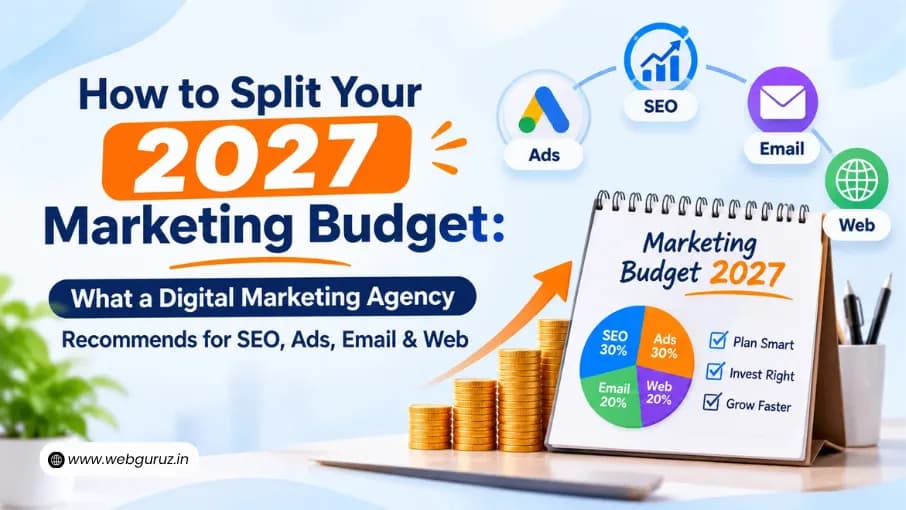
Vedanshi
2026-11-23
7 min read
Most businesses are planning their 2027 marketing budget right now, and most feel the money won’t stretch far enough.
Read More