
 +1 (213) 715-5368
Vedanshi
2026-10-23
7 min read
Custom HubSpot Integrations: Benefits, Examples, and Best Practices
Your business uses HubSpot to manage customer relationships, but disconnected systems create data issues.
Read More
Published On:2025-12-19
If you’ve been paying attention to how people interact with brands online lately, you’ve probably noticed something shifting. Traditional marketing messages that feel salesy or overly polished are getting ignored. Meanwhile, brands that feel authentic, relatable, and culturally aware are building massive, loyal followings seemingly overnight.
This shift has a name, “vibe marketing.” And by 2026, it’s going to completely change how successful brands connect with their audiences.
Before we jump into the future, let’s get clear on what vibe marketing actually means. Unlike traditional marketing that focuses on features, benefits, and direct calls to action, vibe marketing is about creating an emotional atmosphere and cultural connection with your audience.
Think about brands like Duolingo, Ryanair, or Liquid Death. They don’t just sell language learning, flights, or water. They create a specific feeling, personality, and cultural identity that people want to be part of. That’s vibe marketing in action.
What is vibe marketing? At its core, it’s marketing that prioritizes emotional resonance over hard selling, cultural relevance over corporate messaging, and authenticity over perfection. The brands winning with vibe marketing understand that people don’t just buy products anymore; they buy into feelings, identities, and communities.
A Digital Marketing Agency that understands this shift can help brands transition from traditional marketing to this more nuanced, emotionally intelligent approach.
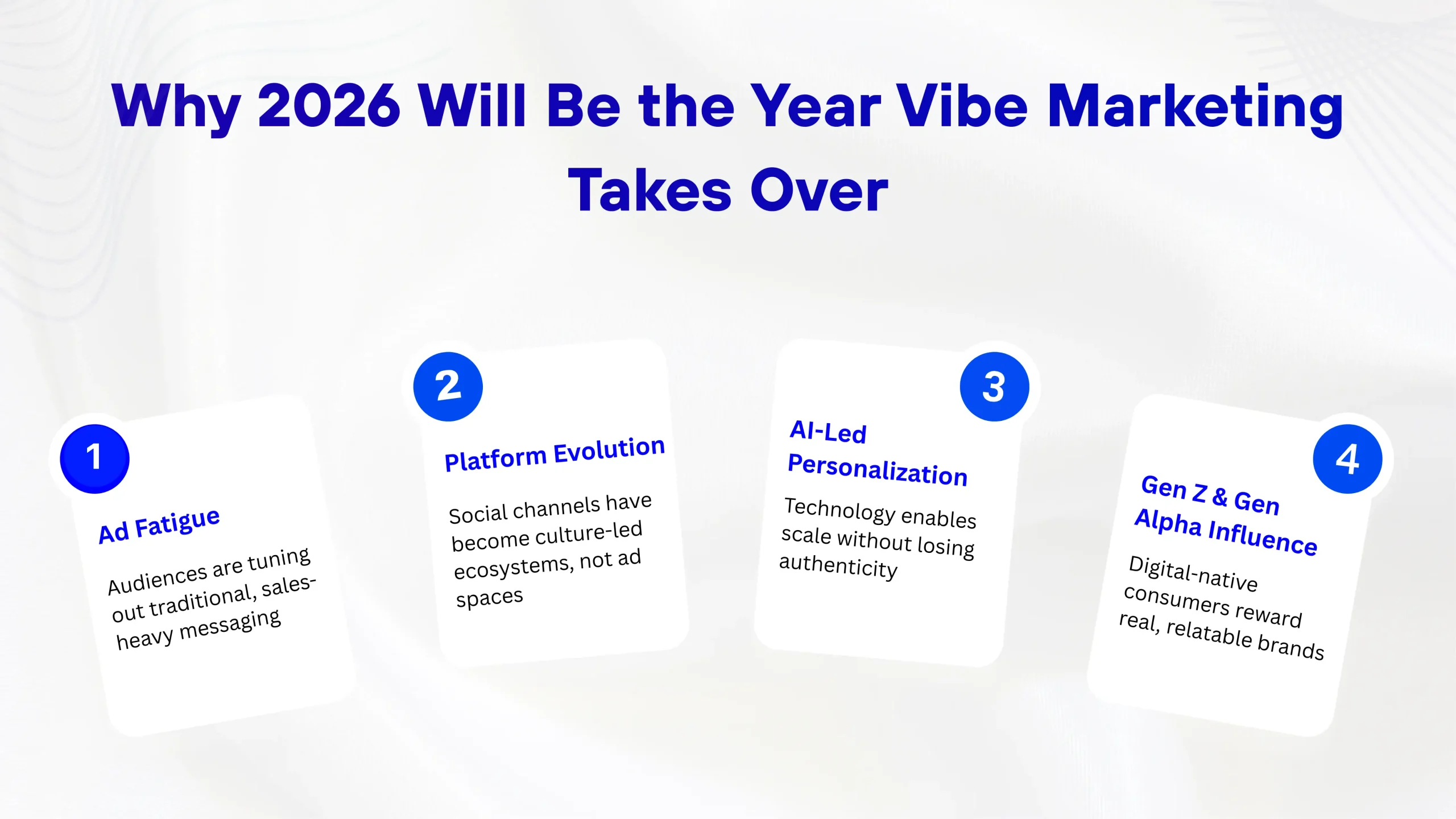
We’re already seeing vibe marketing take over, but 2026 is when it becomes the standard rather than the exception. Here’s why:
People have developed a sixth sense for detecting when they’re being sold to. By 2026, brands that still rely on old-school advertising will struggle to get any attention at all.
Platforms like TikTok and Instagram will have fully evolved beyond being just distribution channels. They’ll be complete ecosystems where brands either vibe with the community or get ignored.
Technology will finally catch up to allow brands to maintain authentic vibes while reaching millions. Marketing automation solutions will handle the technical heavy lifting while preserving the human touch.
By 2026, these generations will represent the majority of consumer spending. They’ve grown up with social media and can spot inauthenticity instantly. Brands that don’t adapt will lose relevance.
As we move into 2026, the vibe marketing strategy will be more sophisticated, data-informed, and technologically enhanced while somehow feeling even more human and authentic.
Successful brands won’t just follow trends; they’ll participate in culture as it unfolds in real time. This requires Social Media Management Services that do more than schedule posts. They need teams that understand cultural moments, can make quick decisions, and know when to join a conversation versus when to stay silent.
The brands that win will respond to trending topics within hours, create content that feels native to each platform’s culture, and engage authentically in comment sections.
Here’s where vibe marketing gets interesting: the best brands will use marketing automation to inform their strategy while keeping human creativity at the center.
Imagine having systems that tell you exactly which emotional tones resonate with your audience, what cultural references they respond to, and when they’re most receptive to different types of messages, all while your creative team uses that data to craft authentic content that feels spontaneous and real.
By 2026, the most successful vibe marketing won’t come from brands talking to audiences; it’ll come from brands creating content with their communities. Content Marketing Services will evolve to facilitate two-way creative partnerships with customers.
This means user-generated content campaigns that feel collaborative, giving community members real creative input, and creating inside jokes that loyal followers understand.
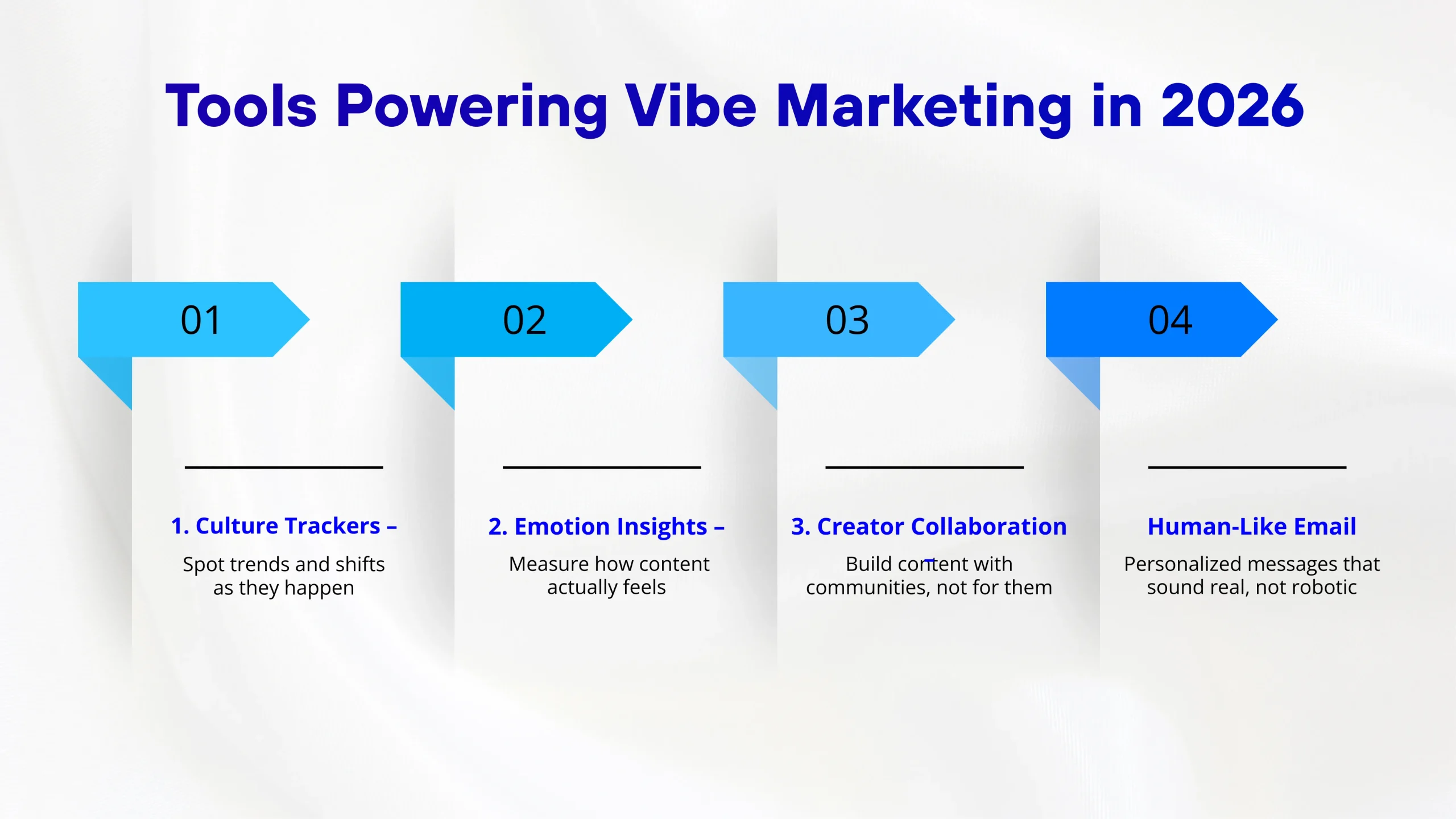
The tools landscape is evolving rapidly. By 2026, brands will have access to sophisticated vibe marketing tools that didn’t exist just a few years ago.
Cultural intelligence platforms will track trending topics and shifting consumer values in real time. Sentiment analysis systems will identify specific emotional responses. Creative collaboration platforms will make it easy for brands and community members to co-create content.
Speaking of tools, email marketing services in 2026 will look completely different. Instead of generic newsletters, expect hyper-personalized messages that feel like they’re from a friend who happens to work at a brand you love.
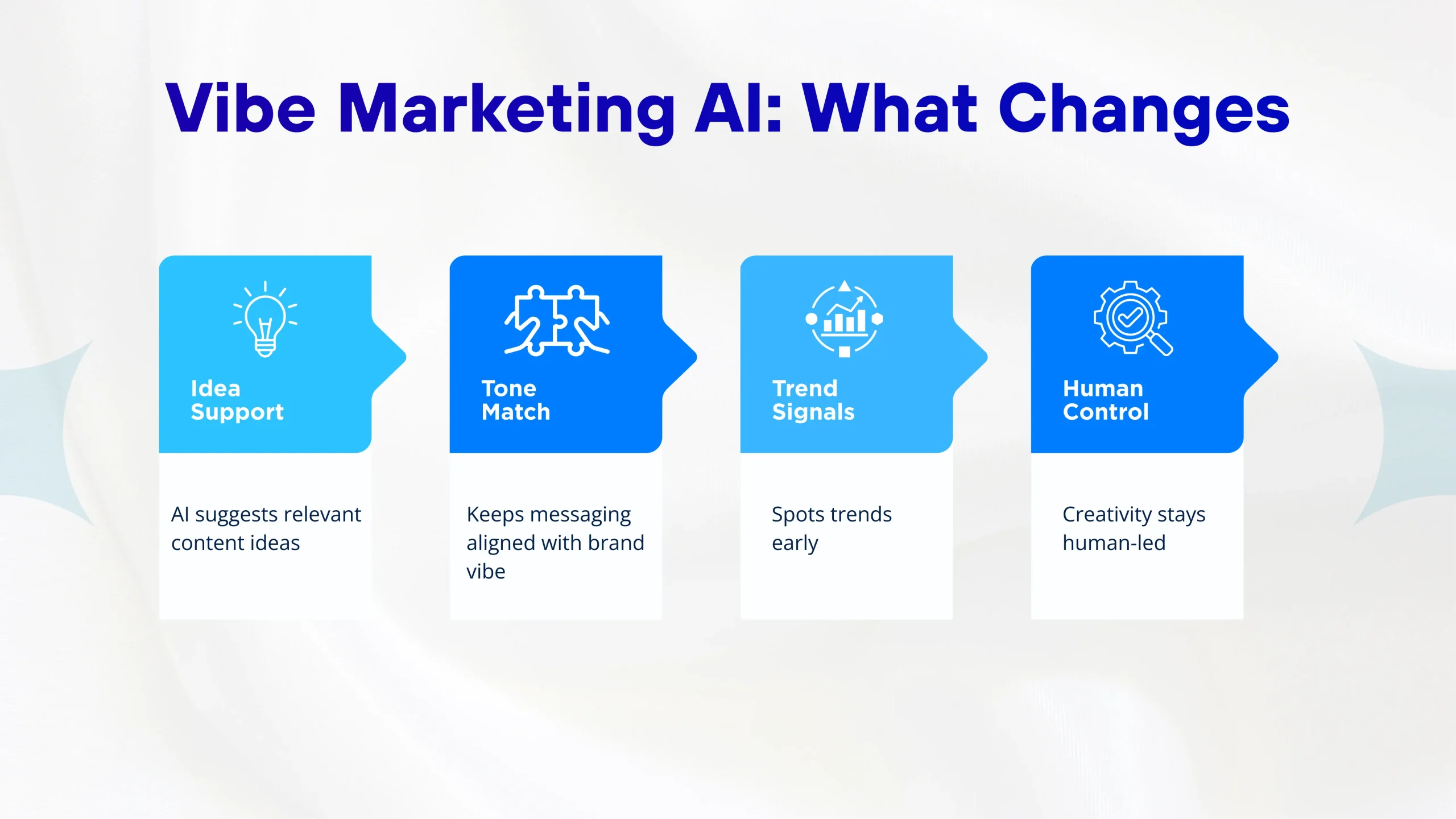
Let’s talk about vibe marketing AI. By 2026, artificial intelligence will play a significant role in vibe marketing, but not in the way you might think. AI won’t replace human creativity; it’ll supercharge it.
AI will help brainstorm culturally relevant content ideas based on real-time data about what’s resonating with specific audiences.
AI tools will analyze successful content and help ensure new content matches your brand’s established vibe while adapting to platform-specific norms.
AI will identify emerging trends before they peak, giving brands a window to participate authentically rather than jumping on bandwagons too late.
The key difference in 2026? Brands will use vibe marketing AI as a tool that enhances human judgment rather than replacing it. The most successful brands will combine technological sophistication with deep cultural understanding.
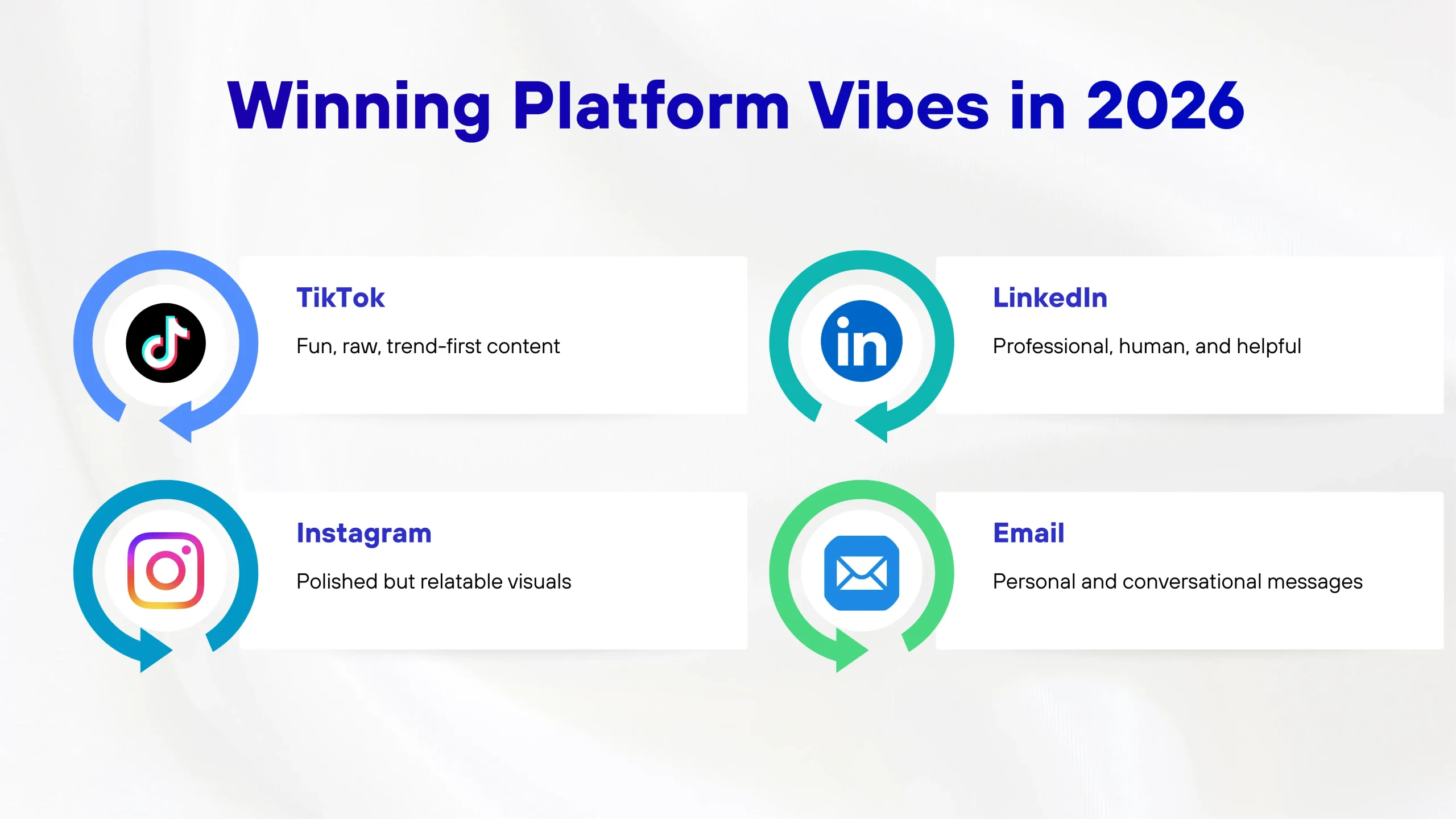
Different platforms require different vibes. By 2026, successful brands will master the unique culture of each platform.
You might think vibe marketing is all organic content, but paid advertising plays a crucial role. It just looks completely different from traditional ads.
The key to paid advertising in the vibe marketing era is making ads that people actually want to see: content that entertains, informs, or resonates emotionally while also advancing business goals.
You might not immediately connect vibe marketing with SEO, but by 2026, they’ll be deeply intertwined. Professional SEO services will need to understand vibe marketing principles to be effective.
Google’s algorithms increasingly prioritize content that keeps people engaged and satisfied. Content with the right vibe naturally performs better in search rankings because people spend more time with it, share it, and link to it.
The intersection includes creating content that answers questions in ways that match the searcher’s emotional state, optimizing for conversational language that reflects how people actually talk, and earning natural backlinks by creating culturally relevant content people want to share.
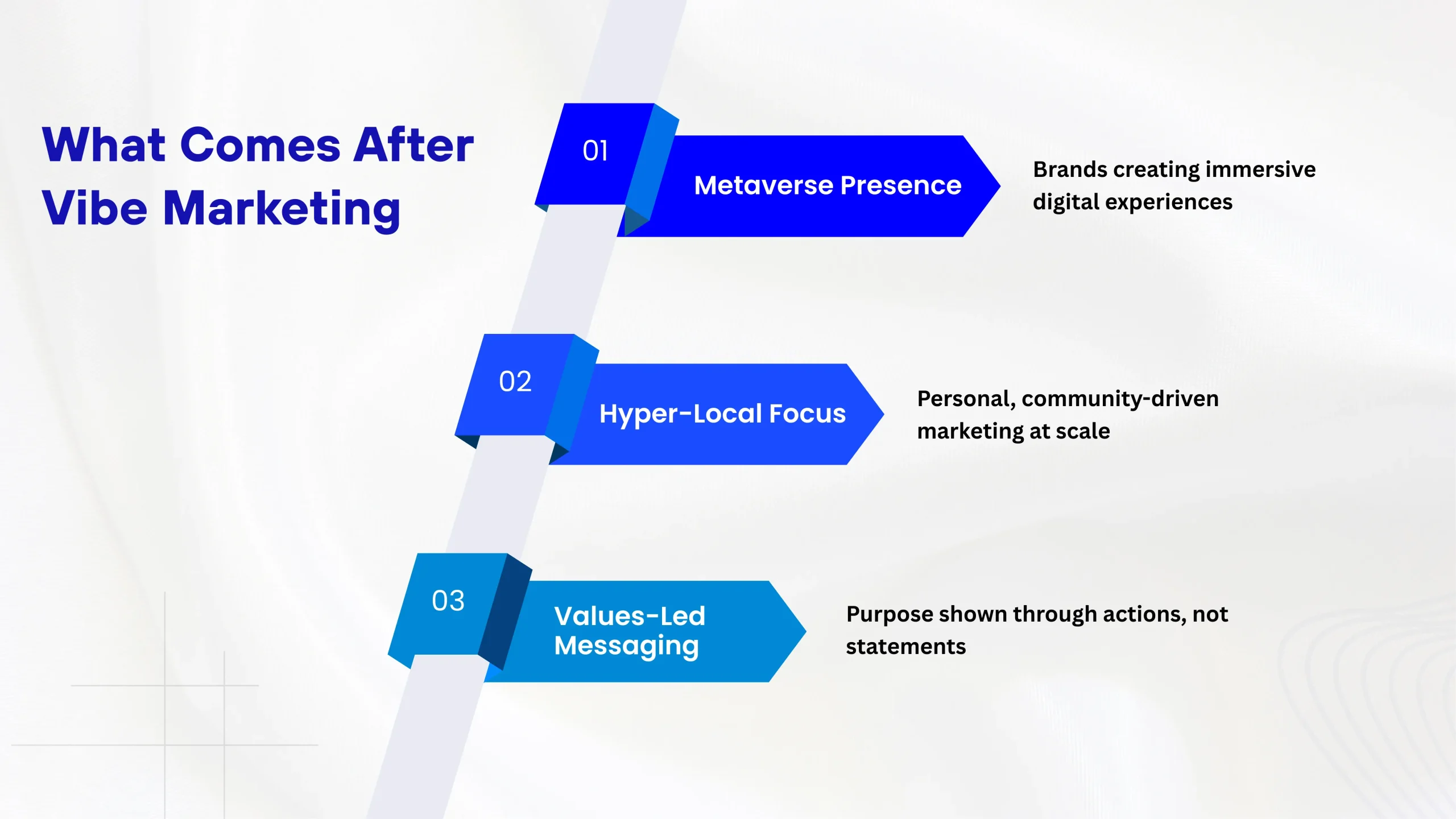
While vibe marketing will dominate 2026, it’s worth noting where things are heading. Future marketing trends we’re already seeing emerge include:
Creating immersive, vibe-rich experiences in virtual spaces where traditional advertising rules don’t apply.
Using technology to scale hyperlocal vibes that make global brands feel neighborhood-specific.
As consumers increasingly make purchases based on brand values, vibe marketing will evolve to communicate ethics through feeling and culture rather than corporate statements.
You don’t have to wait until 2026 to start building your strategy. Here’s how to begin:
Does your brand have a consistent vibe across channels? Can people describe your brand’s personality in a few words?
Whether through training your team, hiring cultural experts, or partnering with a Digital Marketing Agency that specializes in vibe marketing, make cultural intelligence a priority.
Implement marketing automation solutions that allow personalization at scale. Explore vibe marketing tools that help you track emotional resonance.
Work with Content Marketing Services that understand how to create culturally relevant, emotionally resonant content.
Start experimenting with more personality-driven content on social media. See what resonates. Vibe marketing requires iteration and adaptation.
As we move toward 2026, vibe marketing will shift from being a competitive advantage to being a basic requirement for brand relevance. The brands that thrive will be those that combine authentic cultural participation with sophisticated technology and data-informed strategy.
This doesn’t mean every brand needs to be on TikTok making memes. It means every brand needs to develop a genuine personality, understand its audience’s cultural context, and communicate in ways that create emotional resonance.
The tools, technologies, and expertise to do this effectively are rapidly becoming more accessible. Whether you build internal capabilities or partner with specialists, the path forward is clear.
The question isn’t whether your brand will embrace vibe marketing. It’s whether you’ll be early enough to build authentic connections before your entire industry shifts in this direction.
A: No, vibe marketing represents a fundamental shift in how people interact with brands online. As long as social media exists and younger generations dominate consumer spending, authentic, culturally aware marketing will remain essential. The tactics may evolve, but the principles are here to stay.
A: Absolutely, B2B brands can and should use vibe marketing. The principles remain the same, creating authentic connections and emotional resonance, but the vibe will be different. B2B vibe marketing focuses on thought leadership, industry humor, and human connections. Brands like Mailchimp and Slack are great examples.
A: This depends on your audience demographics and industry, but many brands should be shifting their marketing resources toward vibe-based approaches by 2026. Start by reallocating budget from underperforming traditional channels and testing vibe marketing tactics.
A: While having team members who are digital natives helps, age isn’t the determining factor. What matters is cultural awareness, platform fluency, and genuine understanding of how people communicate online. Focus on skills and cultural intelligence rather than age when building your team.
A: Track both traditional metrics (conversions, customer acquisition cost, lifetime value) and vibe-specific metrics (engagement rates, sentiment analysis, community growth, share of voice, and brand affinity scores). The ROI often shows up in improved customer retention, word-of-mouth growth, and the ability to charge premium prices.

Vedanshi
2026-10-23
7 min read
Your business uses HubSpot to manage customer relationships, but disconnected systems create data issues.
Read More
Vedanshi
2026-10-22
7 min read
Ask ChatGPT, Gemini, or Perplexity to recommend a supplier or a software tool, and you get a short list of names, not ten blue links.
Read More
Vedanshi
2026-10-21
7 min read
Building a website takes more than picking colors, dropping in images, and writing copy.
Read More