
 +1 (213) 715-5368
Vedanshi
2026-10-23
7 min read
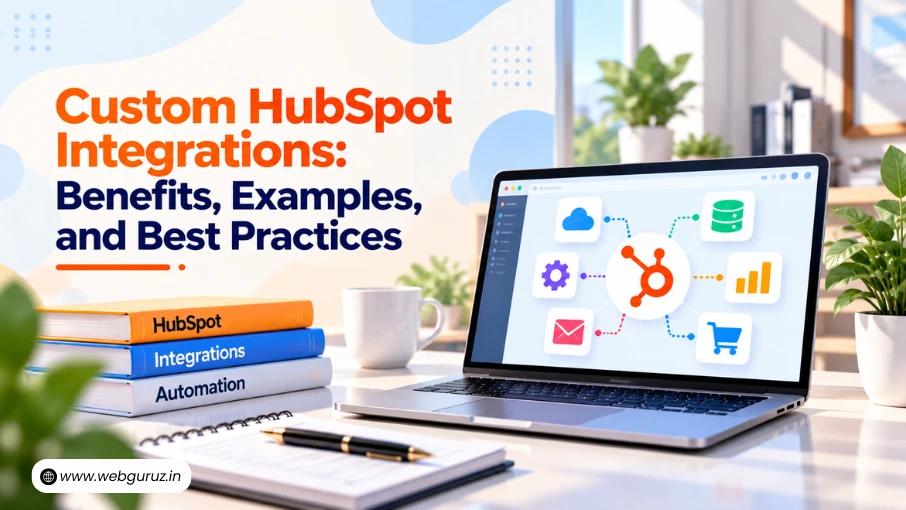
Custom HubSpot Integrations: Benefits, Examples, and Best Practices
Your business uses HubSpot to manage customer relationships, but disconnected systems create data issues.
Read More
Published On:2026-04-06
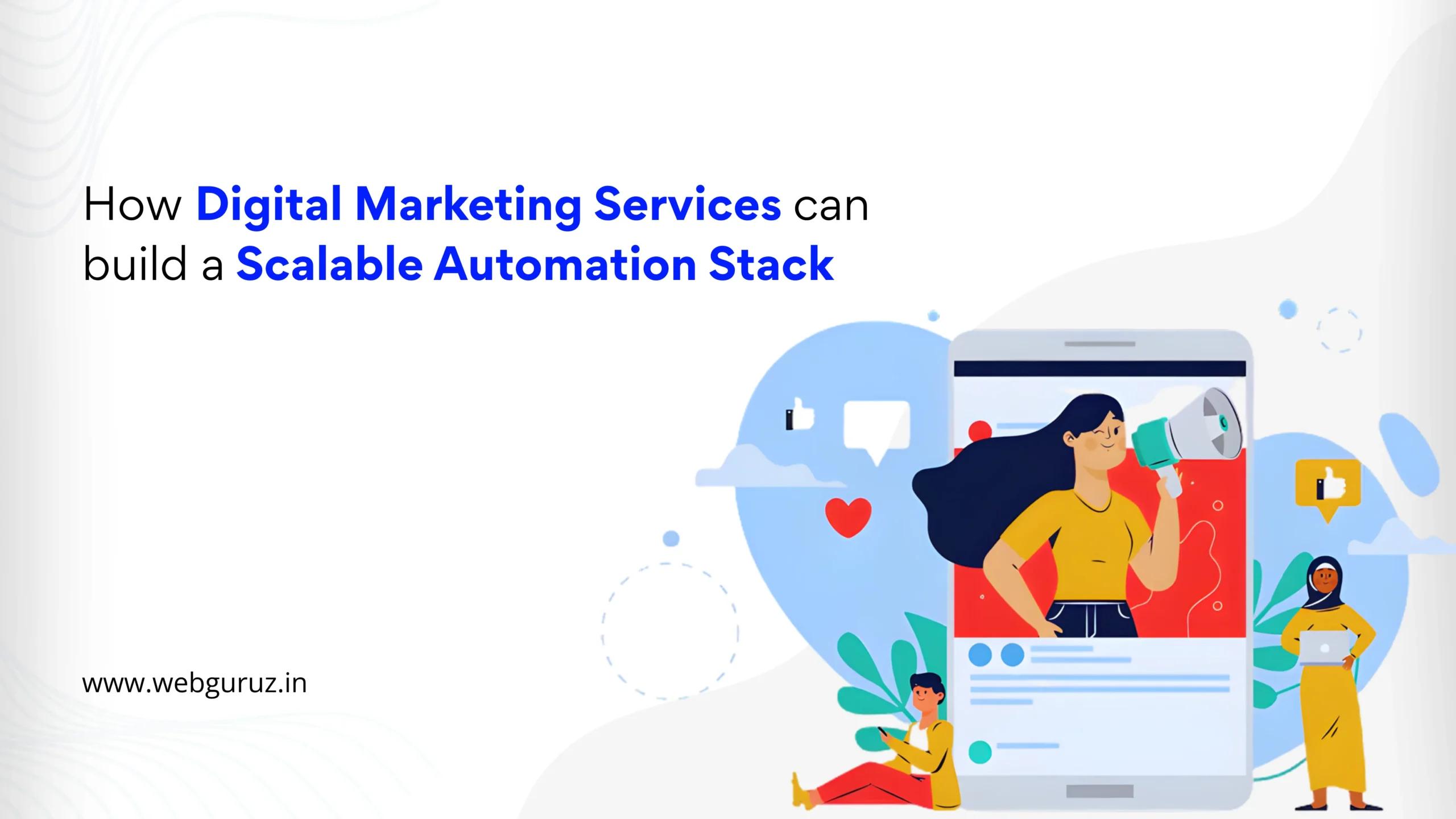
Running a business in 2026 means doing more with less, including less time, less budget, and a smaller team. Yet, your competitors are reaching more people, posting more content, and sending more targeted emails than ever before. How? The answer, more often than not, is automation.
Automation doesn’t work the same for everyone. A random patchwork of tools cobbled together rarely gives you real results. What actually works is building a scalable automation stack, a connected system of tools and strategies that grows with your business. And the best way to build one is to work with the right digital marketing services that understand both technology and strategy.
Let’s break it all down.

Think of a marketing automation stack like the engine of a car. Every part plays a different role, but they all need to work together for the car to move. Your stack might include tools for email, SEO, social media, content creation, analytics, and customer relationship management (CRM).
When these tools are connected and automated, your marketing runs in the background while your team focuses on higher-value tasks. Instead of manually posting on Instagram every day or sending individual follow-up emails, your system handles it consistently, at scale.
According to a report by HubSpot, businesses that use marketing automation see a 451% increase in qualified leads. That’s not a small bump. That’s transformational. But to get there, you need the right foundation.
Before you automate anything, you need people to actually find you. That’s where expert SEO services come in.
SEO (Search Engine Optimization) is the process of making your website show up on Google when potential customers search for products or services like yours. Without it, even the best automation stack won’t have enough traffic to work with.
Here’s what expert SEO services typically set up for you:
SEO is the foundation because it drives free, consistent, long-term traffic. Everything else in your automation stack benefits when more people are landing on your site.
Once people find you, you need something valuable waiting for them. That’s where content marketing services and SEO content writing services come into play.
Great content does two things at once: it helps your website rank on Google, and it educates and converts your visitors into customers. When you pair content creation with automation, your blog posts, landing pages, and guides are working around the clock, even on weekends.
SEO content writing services specifically craft content that is optimized for search engines while still sounding natural and helpful to readers. This isn’t about stuffing keywords into every paragraph. It’s about creating content that answers real questions your audience is typing into Google.
Here’s how scalable content automation typically looks:
According to Demand Metric, content marketing costs 62% less than traditional marketing and generates about three times as many leads. For small to medium-sized businesses, that’s a huge deal.
A practical use case: An e-commerce brand selling eco-friendly home products partnered with a content agency to publish two SEO-optimized blogs per week. After four months, their organic search traffic doubled, and their email subscriber list grew by 60%, purely through content driving sign-ups.
Maintaining an active social media presence manually is exhausting. Posting every day across Instagram, LinkedIn, Facebook, and X (formerly Twitter) is practically a full-time job on its own.
That’s why social media management services are a critical layer in any scalable automation stack.
A good social media management setup includes:
The key difference between social media management services and just “posting content” is strategy. An agency or service team will analyze what type of content performs best for your specific audience, what times to post, and how to build a consistent brand voice.
Social media automation doesn’t mean robotic, impersonal content. Done right, it feels very human, just consistent.
Email marketing remains one of the most powerful tools in digital marketing. The average ROI on email is $36 for every $1 spent, according to Litmus. But most businesses are leaving money on the table because they’re not automating it properly.
Email marketing services go far beyond sending a monthly newsletter. A proper email automation system includes:
Tools like Klaviyo, Mailchimp, ActiveCampaign, and ConvertKit make this kind of automation accessible even for small businesses.
Here’s a real use case: An online course creator used email marketing services to build a 10-email welcome sequence for new subscribers. Each email delivered a lesson, a tip, and a soft pitch at the end. This sequence alone converted 18% of new subscribers into paying customers within 30 days, fully automated.
When email marketing services are properly integrated into your stack, leads don’t go cold. They’re consistently warmed, educated, and nudged toward a purchase decision, all without anyone manually pressing “send.”
Here’s where most businesses drop the ball. They invest in SEO, content, social, and email, but they never connect the data. So they can’t tell which channels are actually driving revenue.
A proper automation stack ties everything together with:
When digital marketing services set this up correctly, you can see that a specific blog post, written by your team of SEO content writing services, drove 300 email sign-ups, 40 of which became paying customers. That’s the kind of clarity that lets you make smarter decisions and invest your marketing budget in what actually works.

Scalability means your marketing system can handle growth without breaking. Here’s what separates a scalable stack from a messy one:
Working with experienced digital marketing services providers means you don’t have to figure all this out yourself. They’ve already built stacks for dozens of businesses and know what works and what doesn’t.
It depends on the complexity of your business, but most agencies can have a basic stack operational within 30–60 days. A fully integrated system with advanced workflows typically takes 3–6 months to optimize properly.
Not necessarily. Many tools like Mailchimp, Buffer, and Google Analytics have free or low-cost tiers. The investment is more about strategy and setup. Even a lean stack built with $200–$500/month in tools can deliver a strong ROI when set up correctly.
Absolutely. In fact, small businesses often benefit more from SEO content writing services because organic search is a great equalizer; a well-written blog post from a small brand can outrank a major corporation if it answers a question better.
A social media management service typically brings a full team, including strategists, designers, copywriters, and analysts, for the cost of one in-house hire. They also bring proven systems and tools already in place, which speed up results significantly.
Yes, very much so. Despite the rise of social media and short-form video, email marketing services consistently outperform most channels in terms of ROI. The key is personalization and automation, which make modern email campaigns far more targeted and effective than the generic newsletters of the past.
Vedanshi
2026-10-23
7 min read
Your business uses HubSpot to manage customer relationships, but disconnected systems create data issues.
Read More
Vedanshi
2026-10-22
7 min read
Ask ChatGPT, Gemini, or Perplexity to recommend a supplier or a software tool, and you get a short list of names, not ten blue links.
Read More
Vedanshi
2026-10-21
7 min read
Building a website takes more than picking colors, dropping in images, and writing copy.
Read More