
 +1 (213) 715-5368
Vedanshi
2026-10-23
7 min read
Custom HubSpot Integrations: Benefits, Examples, and Best Practices
Your business uses HubSpot to manage customer relationships, but disconnected systems create data issues.
Read More
Published On:2026-01-15
Customer relationship management has become the backbone of modern business operations, and things are changing faster than ever. If you’re using Salesforce CRM or thinking about getting started, you need to know what’s coming next. The landscape is shifting, and staying informed about these trends can give your business a real competitive edge.
Whether you’re a small startup or a large enterprise, understanding where the platform is headed helps you make smarter decisions about your tech investments. Let’s break down the trends that are actually making a difference right now.
Remember when artificial intelligence felt like science fiction? Those days are gone. AI has moved from a nice-to-have feature to an absolute necessity for businesses that want to stay competitive.
The numbers tell the story clearly. Companies using AI in their Salesforce platforms are seeing dramatic improvements in productivity and customer satisfaction. Salesforce Einstein Services now power everything from predicting customer behavior to automating routine tasks that used to eat up hours of your team’s time.
Here’s what AI is doing for businesses right now:
The game-changer is that you don’t need a data science team to use these features anymore. AI agents work in the background, making your team smarter without requiring them to understand complex algorithms.
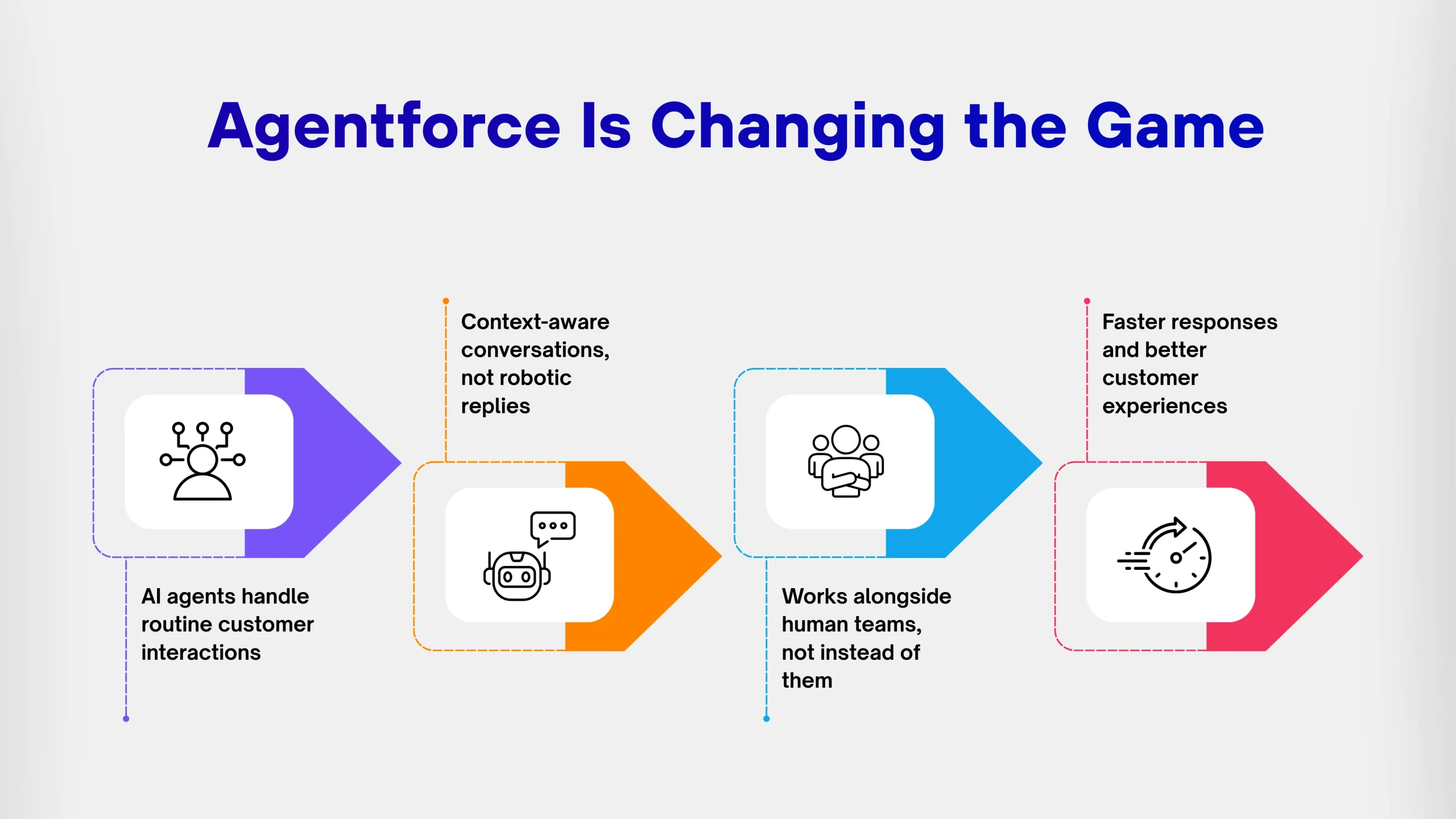
Speaking of AI agents, Salesforce Agentforce represents a major shift in how businesses handle customer interactions. Think of Agentforce as having virtual team members who never sleep, never take breaks, and handle routine questions with perfect consistency.
These aren’t chatbots that frustrate customers with robotic responses. Agentforce agents understand context, learn from interactions, and can handle complex conversations. They work alongside your human team, taking care of repetitive tasks so your people can focus on situations that need a human touch.
Businesses implementing Agentforce are reporting faster response times and happier customers. The AI handles the routine stuff, and real people step in when empathy and creativity matter most.
If you sell complex products or services with lots of configuration options, Salesforce CPQ Solutions have become incredibly sophisticated. CPQ stands for Configure, Price, Quote, and the technology now does way more than just generate quotes.
Modern CPQ systems use AI to suggest optimal product bundles, automatically apply discounts based on business rules, and catch pricing errors before they reach customers. For sales teams, this means spending less time on spreadsheets and more time actually selling.
The integration between CPQ and other Salesforce tools creates a seamless experience. Your sales team gets accurate quotes generated in minutes instead of hours, and your customers receive proposals that look professional and error-free.
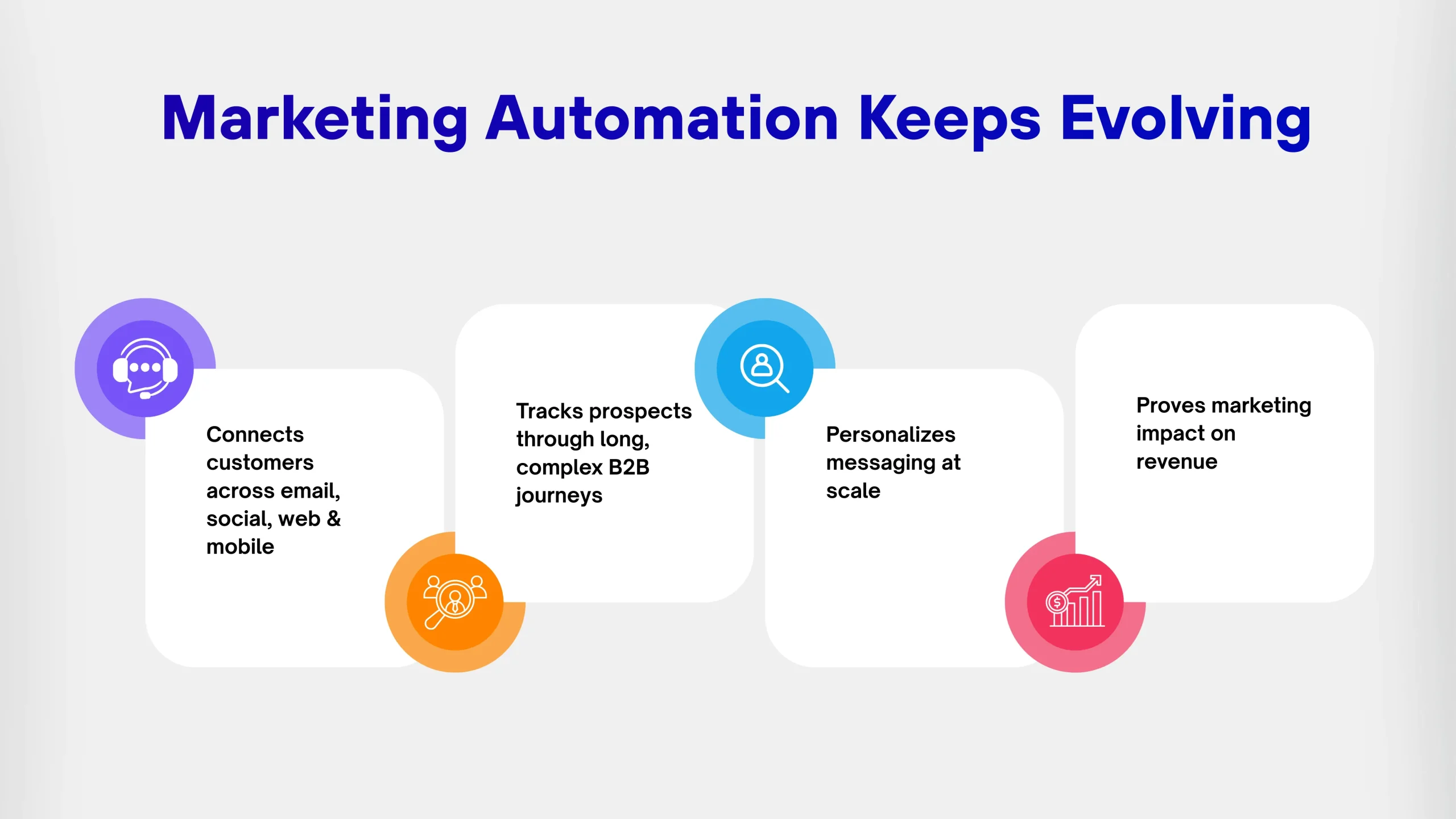
Salesforce Marketing Cloud continues to add features that help businesses connect with customers across every channel imaginable. Email, social media, mobile apps, and websites: everything connects into one unified view of your customer.
What’s really exciting is how marketing automation is helping B2B companies track prospects through longer, more complex buying journeys. The tools specialize in understanding business-to-business sales cycles, where decisions take weeks or months instead of minutes.
The trend here is personalization at scale. You can now send thousands of emails that each feel personally written for the recipient. The system tracks behavior, adjusts messaging automatically, and helps marketing teams prove their impact on revenue.
Customer service can make or break your business reputation. Salesforce Service Cloud has evolved into a complete customer service platform that handles support tickets, live chat, phone calls, and social media messages all in one place.
The trend we’re seeing is businesses moving away from multiple disconnected tools to Service Cloud as their central hub. When everything connects, your service team can see the complete customer history instantly. No more asking customers to repeat information or switching between five different applications.
Service Cloud now includes AI-powered features that suggest solutions to agents, automatically route tickets to the right people, and even resolve simple issues without human intervention. Your team works faster, and customers get help quicker.
Your business probably uses dozens of different software tools. Salesforce Integration Services have become critical because isolated systems create problems. When your Salesforce data doesn’t talk to your accounting software or your inventory system, you end up with mistakes and duplicate work.
The trend is moving toward connected ecosystems where data flows automatically between systems. When a sale closes in Salesforce, your accounting system should know immediately. When inventory levels change, your sales team should see updated information in real time.
Professional integration services make these connections happen smoothly. Instead of manual data entry and spreadsheet exports, everything syncs automatically in the background.
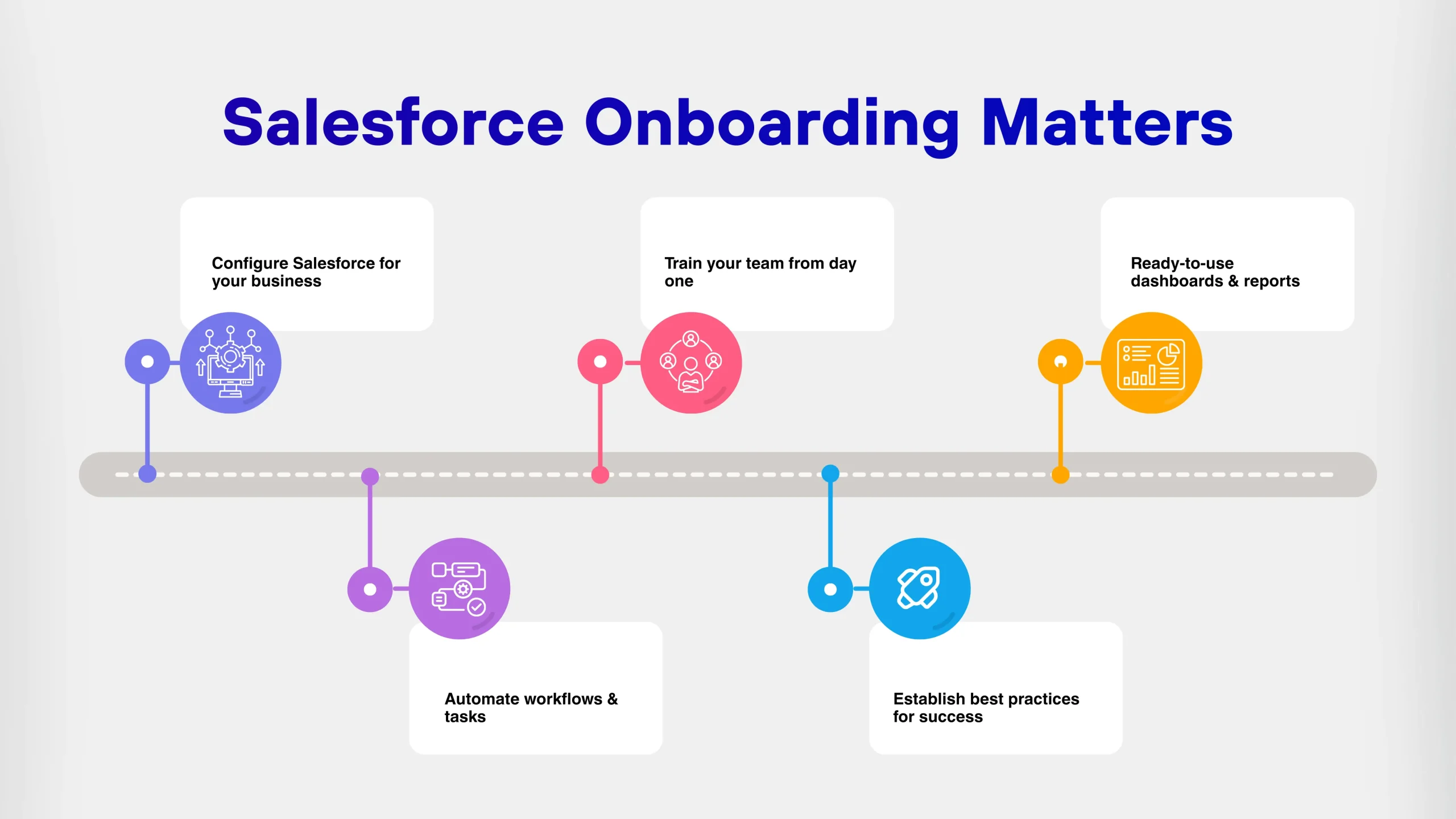
Here’s something many businesses learn the hard way: buying Salesforce is just the first step. Salesforce Onboarding determines whether you’ll actually succeed with the platform or struggle for years.
The trend we’re seeing is businesses investing more upfront in proper onboarding rather than trying to figure things out themselves. Professional onboarding includes:
Companies that invest in quality onboarding see returns on their Salesforce investment within months. Those who skip this step often struggle for years or give up entirely.
Salesforce Consulting Services have shifted from being occasional helpers to strategic partners. The platform is so powerful and complex now that having expert guidance makes a huge difference in results.
Good consultants don’t just set up software. They understand your business goals and configure Salesforce to support those specific objectives. They’ve seen what works across hundreds of other companies and can help you avoid common mistakes.
The trend is toward ongoing consulting relationships rather than one-time projects. As your business grows and changes, having consultants who know your setup and can adapt it quickly becomes incredibly valuable.
Your team doesn’t work only at desks anymore. Sales reps meet clients at coffee shops, service technicians visit customer sites, and managers check dashboards from airports. Salesforce has responded by making mobile functionality a priority.
The mobile app now includes almost everything available on desktop. Your team can update records, check customer information, respond to cases, and access reports from their phones. This isn’t just convenient; it’s becoming essential for businesses that need real-time information anywhere.
The future points toward even more AI integration, better mobile experiences, and tighter connections between all business systems. The companies succeeding with Salesforce are those treating it as a strategic platform, not just software they bought.
Salesforce Services continue to expand and improve, giving businesses of all sizes access to enterprise-level tools. Whether you’re focused on artificial intelligence, exploring pricing solutions, or implementing marketing automation, the key is starting with clear goals and getting the right expertise involved.
The trends we’ve covered aren’t just interesting technology news. They represent real opportunities to serve customers better, make your team more productive, and grow your business faster. The question isn’t whether to pay attention to these trends; it’s how quickly you can start using them to your advantage.
Einstein is Salesforce’s AI layer that powers predictive analytics and smart recommendations across the platform. Agentforce specifically refers to AI agents that autonomously handle tasks and customer interactions. Think of Einstein as the brain and Agentforce as the workers using that brain.
Even small businesses benefit from consulting, especially during setup. A few hours with an expert can save you months of frustration. Many consultants offer packages specifically designed for small business budgets and needs.
Basic onboarding usually takes 4-8 weeks, depending on your company’s size and complexity. This includes setup, configuration, data migration, and team training. Rushing through onboarding is one of the biggest mistakes businesses make.
Not necessarily everything, but Salesforce can consolidate many tools. With proper integration services, it becomes your central hub that connects with other specialized software you need. The goal is connection, not necessarily replacement.
Not anymore. Many AI features are built in and activate with simple settings. For more advanced AI implementation, working with specialists in Salesforce AI Enablement makes the process straightforward, even for non-technical teams.
Vedanshi
2026-10-23
7 min read
Your business uses HubSpot to manage customer relationships, but disconnected systems create data issues.
Read More
Vedanshi
2026-10-22
7 min read
Ask ChatGPT, Gemini, or Perplexity to recommend a supplier or a software tool, and you get a short list of names, not ten blue links.
Read More
Vedanshi
2026-10-21
7 min read
Building a website takes more than picking colors, dropping in images, and writing copy.
Read More