
 +1 (213) 715-5368
Vedanshi
2026-10-23
7 min read
Custom HubSpot Integrations: Benefits, Examples, and Best Practices
Your business uses HubSpot to manage customer relationships, but disconnected systems create data issues.
Read More
Published On:2026-01-15
Remember when SEO was just about stuffing keywords into your content and hoping Google would notice? Those days are gone. We’re in the middle of a massive shift, one where artificial intelligence is completely reshaping how people find information online.
If you’ve been hearing terms like “Generative Engine Optimization” or “ChatGPT SEO” and wondering what they mean for your business, you’re in the right place. Let’s break down this AI SEO revolution and figure out what you actually need to do about it.
Millions of people are now using ChatGPT, Google’s AI Overviews, and other AI-powered tools to find answers instead of clicking through traditional search results. When someone asks ChatGPT, “What’s the best project management tool for small teams?” they get an immediate answer, with no scrolling through ten different blog posts required.
This changes everything for businesses trying to get noticed online. Traditional SEO services focused on ranking your website on Google’s first page. But now? You also need to show up in AI-generated responses. That’s where Generative Engine Optimization services come in.
Think of it this way. Google search is like a library where people browse shelves to find books. AI search is like having a librarian who reads everything and gives you a personalized summary. Both are valuable, but they require different strategies to get your content noticed.
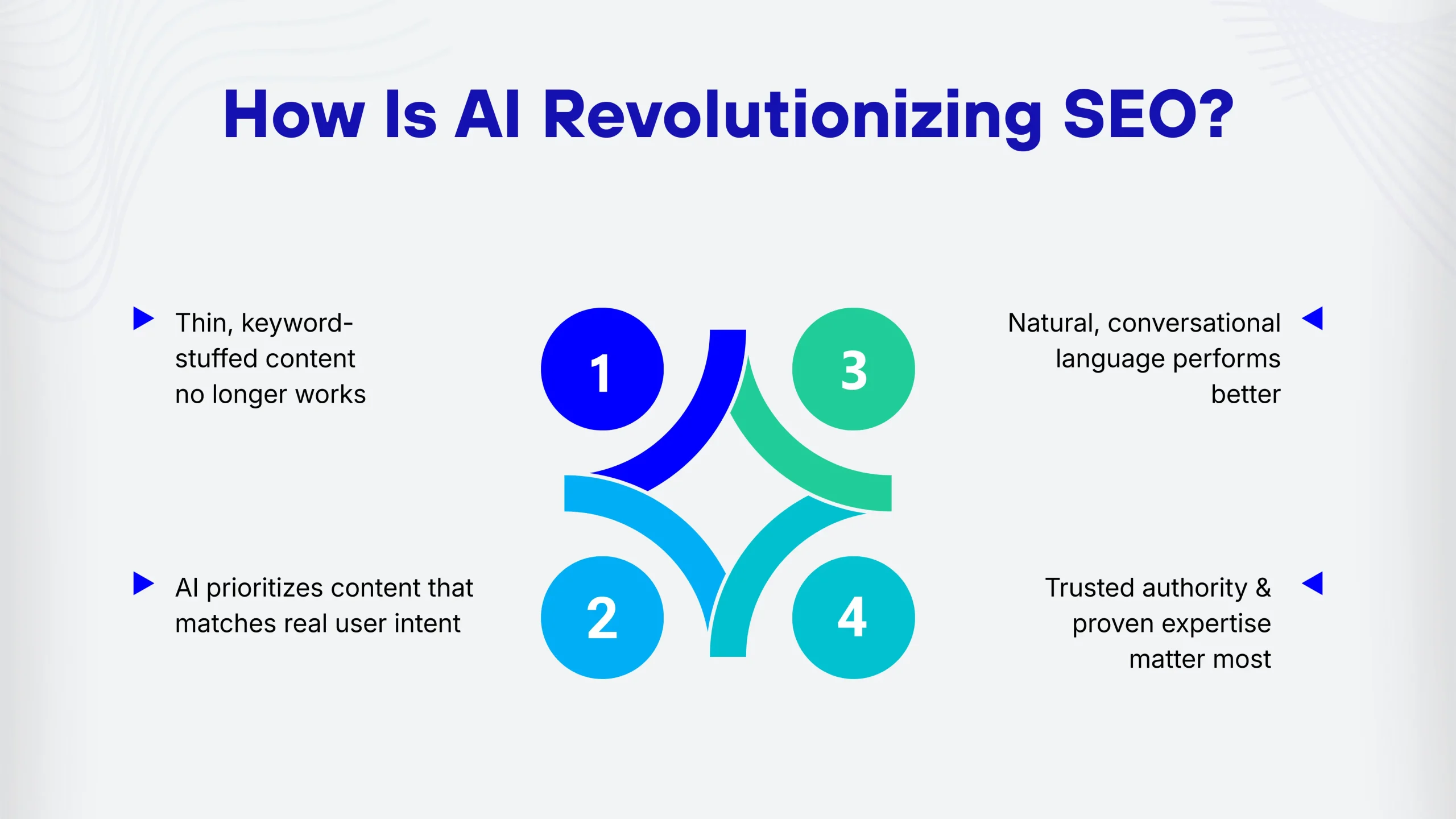
The changes are bigger than most people realize. Here’s what’s actually different now:
AI tools can spot thin, generic content from a mile away. Those 300-word blog posts stuffed with keywords? They’re basically worthless now. AI SEO Tools and search engines are looking for content that provides real value, including detailed explanations, personal insights, and information people can actually use.
AI systems are incredibly good at understanding what people really want. If someone searches “best running shoes,” AI knows they might want recommendations, reviews, buying guides, or even information about foot health. Your content needs to match that deeper intent, not just include the right keywords.
People talk to AI differently than they type into Google. They ask full questions like “Can ChatGPT do SEO optimization?” instead of typing “ChatGPT SEO.” This shift toward natural language means your content should sound like you’re having a conversation, not reading from a textbook.
AI systems pull information from sources they trust. If you want your content included in AI-generated answers, you need to establish real authority. That means showing expertise, citing sources, and proving you know what you’re talking about.
GEO stands for Generative Engine Optimization. It’s the next evolution of SEO, focused specifically on getting your content featured in AI-generated responses.
While traditional SEO services try to rank your website high on search engine results pages, Generative Engine Optimization services work to make your content the source AI tools reference when answering questions. It’s about being the trusted expert that ChatGPT, Bard, or Bing AI cites in their responses.
Here’s a practical example: Let’s say you run a local bakery. Traditional SEO might help you show up when someone searches “bakery near me.” But GEO helps you become the source ChatGPT references when someone asks, “How do I make sourdough bread at home?” Even if they don’t visit your website, they’re learning from your expertise, and that builds brand awareness and trust.
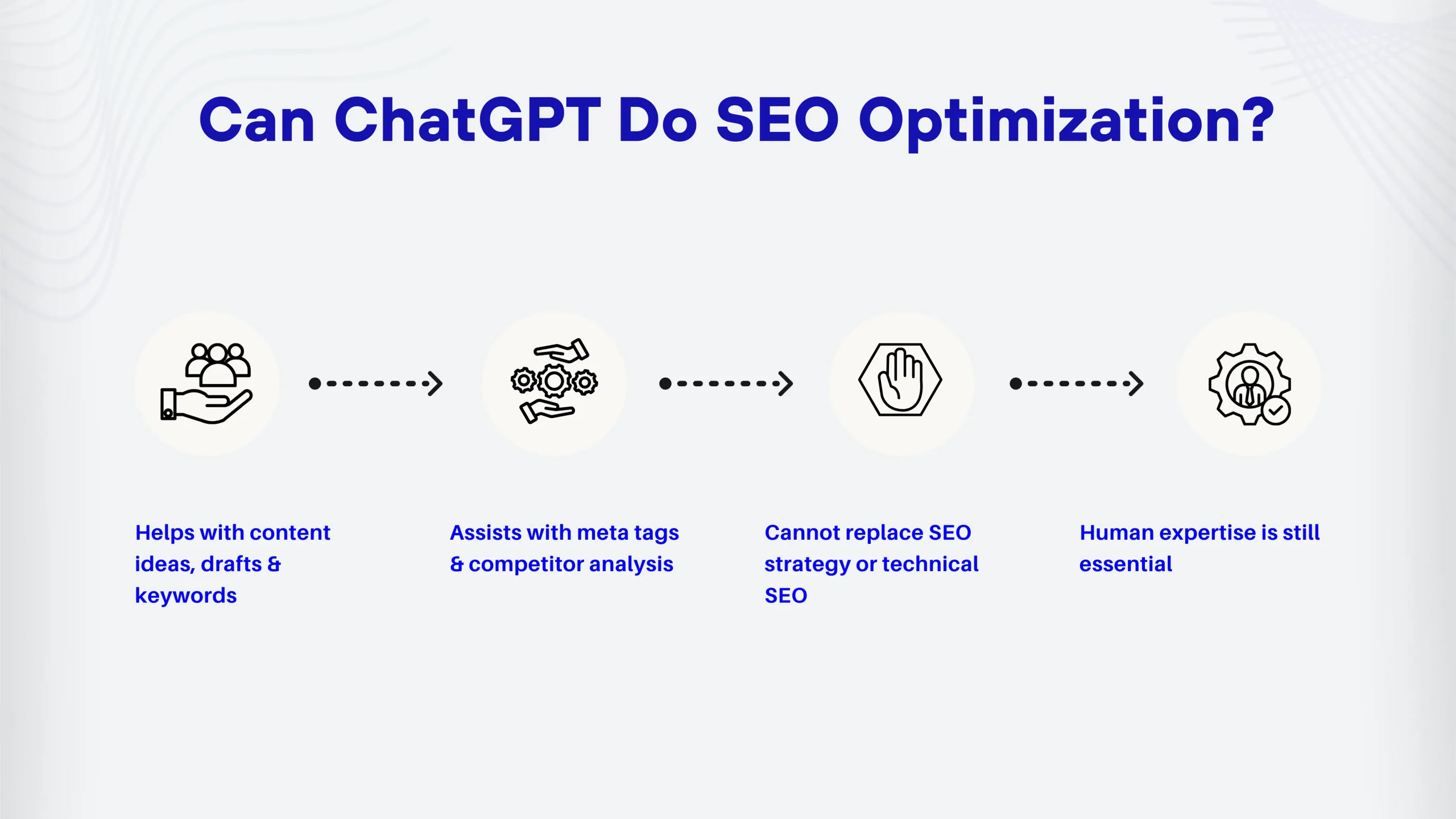
Yes and no. ChatGPT can help with parts of SEO, but it can’t do everything.
What ChatGPT SEO services can do:
What ChatGPT SEO solutions can’t replace:
The best approach? Use ChatGPT as a helpful assistant, not a replacement for human expertise. Many businesses work with an AI SEO Agency that combines AI tools with human strategy to get the best results.
Getting your content featured in ChatGPT’s responses requires a different approach than traditional Google optimization. Here’s what works:
AI tools favor detailed, well-researched content. Instead of five 500-word blog posts, consider writing one 2,500-word comprehensive guide. Cover topics thoroughly, answer related questions, and provide examples.
When you’re doing SEO content writing for AI search, think about what a trusted expert would say if someone asked them directly. That’s the tone and depth you’re aiming for.
AI systems need to quickly parse and understand your content. Use clear headings, short paragraphs, and bullet points. Make your main points obvious. Think about how you’d explain something to a friend. That clarity is what AI looks for.
Include author bios that showcase relevant experience. Cite reputable sources. Show that real experts created or reviewed your content. These trust signals matter enormously for SEO for generative AI.
People ask AI tools direct questions. Structure some of your content to answer specific questions your audience has. What are they trying to figure out? What problems are they solving? Address those directly.
While content quality matters most, technical SEO services are still crucial. Your site needs to load fast, work on mobile devices, and be easy for AI crawlers to access and understand. Broken links, slow load times, and confusing site structures hurt you in both traditional and AI search.
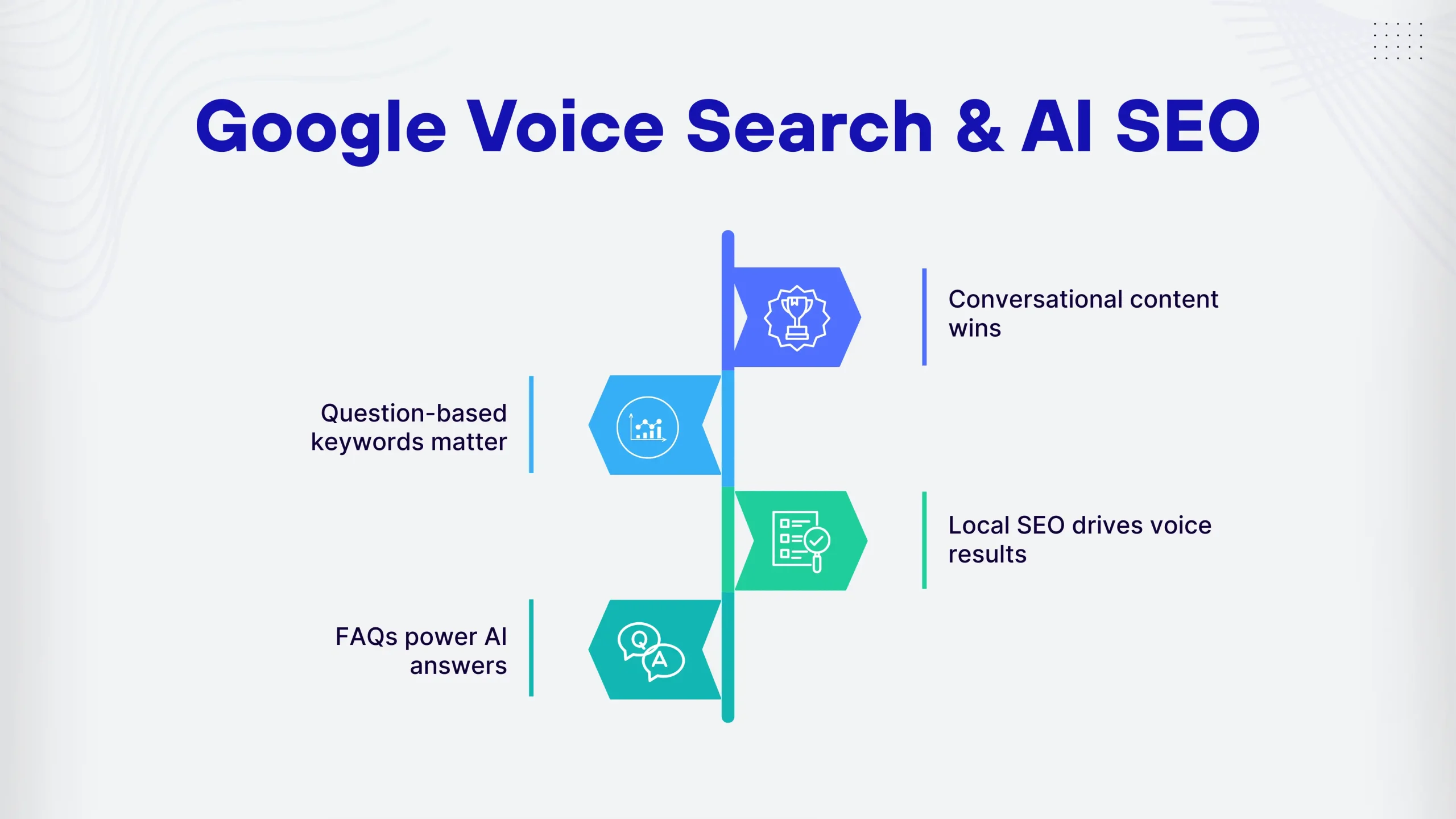
Voice search and AI search go hand in hand. When people use voice assistants, they’re often getting AI-generated answers. This is especially important for local businesses aiming to grow and reach more customers online.
Here’s how to optimize:
Google voice search optimization isn’t separate from AI SEO; it’s part of the same shift toward more natural, conversational search experiences.
You don’t need to figure this out alone. Generative Engine Optimization tools can help you adapt to these changes:
These scan your content and show you how well it aligns with AI search preferences. They check for depth, clarity, structure, and trust signals.
New tools help you find questions people ask AI systems, not just traditional search queries. This helps you create content that matches how people actually interact with AI.
Some AI SEO Tools let you see when AI systems reference your content. This helps you understand what’s working and where to focus your efforts.
See which competitors are showing up in AI-generated responses and what they’re doing differently.
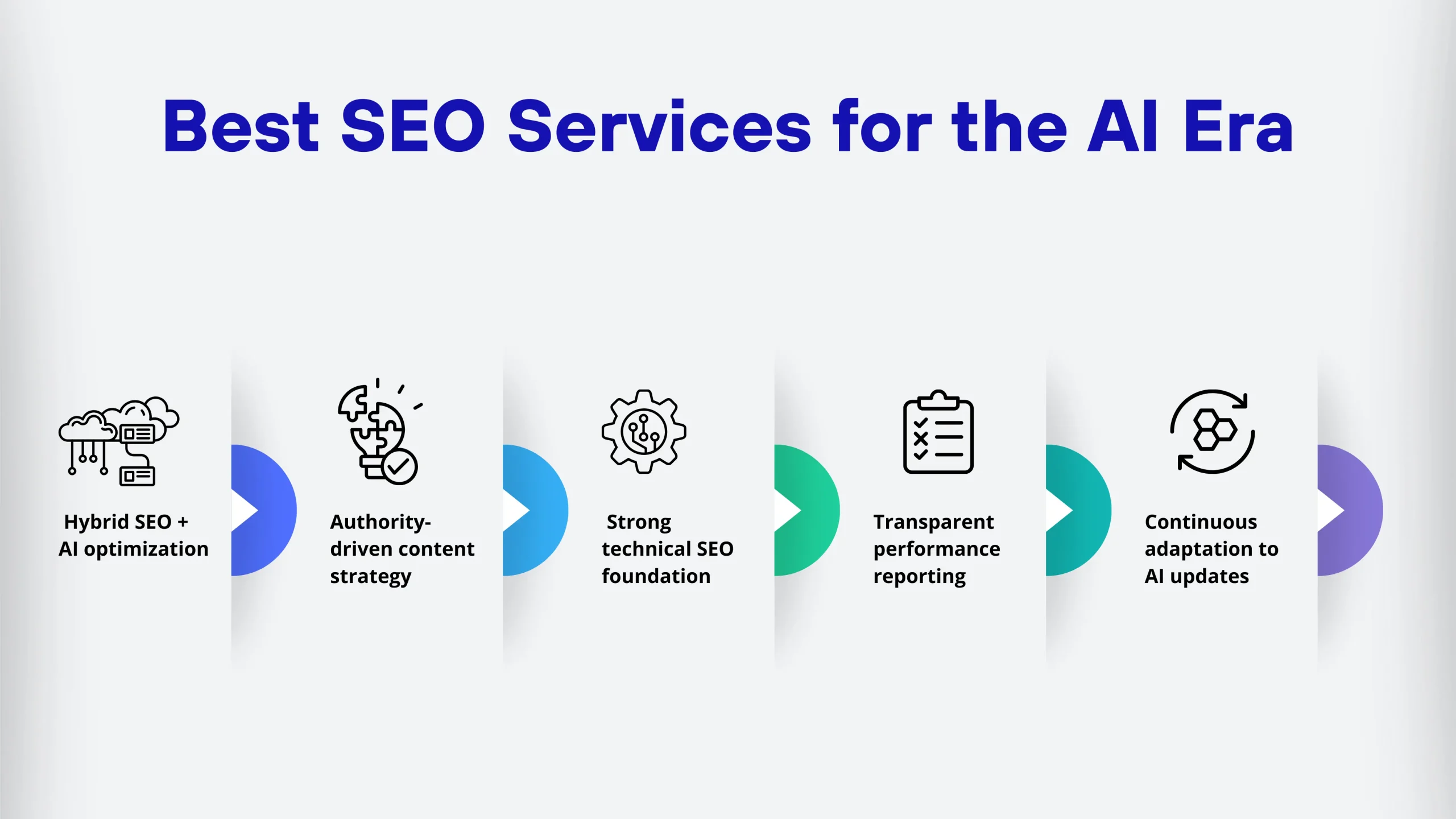
If you’re wondering what to look for in Best SEO Services today, here’s what matters:
Look for providers who understand both traditional SEO and generative AI optimization. You need someone who can optimize for Google, ChatGPT, and whatever comes next.
Generic content creation won’t cut it anymore. You need SEO consulting services that can develop truly valuable, authoritative content strategies.
Technical SEO services are more important than ever. AI tools need clean, fast, accessible websites just like traditional search engines do.
Good ChatGPT SEO solutions providers show you real results, not just rankings, but actual traffic, engagement, and conversions.
This field changes fast. Partner with people who stay current and adjust strategies as new AI tools and algorithms emerge.
If you’re running a small business, this might all sound overwhelming. But the good news is that you don’t need a massive budget to compete.
Small businesses actually have some advantages in the AI SEO world:
AI systems value genuine expertise and unique perspectives. You don’t need to be the biggest; you just need to be real and knowledgeable about your niche.
For local businesses, combining traditional SEO with AI optimization is incredibly powerful. When someone asks ChatGPT for recommendations in your area, you want to be mentioned.
Small businesses often serve specific niches. Deep expertise in a focused area is exactly what AI systems look for when generating responses.
The key is finding SEO services for small businesses that understand these opportunities and can help you maximize them without breaking the bank.
This is just the beginning. Here’s what’s coming:
The businesses that succeed will be those that stay flexible, focus on quality, and treat AI as a tool rather than a threat.
You don’t need to do everything at once. Start here:
Whether you handle this in-house or use ChatGPT SEO solutions, the important thing is to start adapting now. The gap between businesses that optimize for AI and those that don’t will only grow wider.
AI isn’t replacing SEO; it’s transforming it. The fundamentals still matter: create great content, build authority, provide real value, and make your site technically sound. But now you need to think beyond just ranking on Google.
The businesses winning in this new landscape are those that embrace both traditional and generative search optimization. They use AI SEO Tools to work smarter, create content that serves actual human needs, and stay focused on building genuine expertise.
Yes, absolutely. Traditional search engines still drive massive traffic. Plus, many AI systems use traditional search results as source material. You need both strategies working together.
Most businesses see initial results within 3-6 months, but building strong AI search visibility typically takes 6-12 months. It depends on your current authority and content quality.
Not necessarily. Many strategies overlap. You’re creating better content and building stronger authority, things that help everywhere. Some specialized AI SEO Tools add cost, but the foundational work is similar.
Yes! AI systems value expertise and relevance over brand size. If you’re genuinely knowledgeable about your niche and create quality content, you can absolutely compete with bigger competitors.
No. Use AI as an assistant for drafting and ideation, but human expertise, editing, and insight are crucial. AI-generated content alone rarely performs well in either traditional or AI search.

Vedanshi
2026-10-23
7 min read
Your business uses HubSpot to manage customer relationships, but disconnected systems create data issues.
Read More
Vedanshi
2026-10-22
7 min read
Ask ChatGPT, Gemini, or Perplexity to recommend a supplier or a software tool, and you get a short list of names, not ten blue links.
Read More
Vedanshi
2026-10-21
7 min read
Building a website takes more than picking colors, dropping in images, and writing copy.
Read More