
 +1 (213) 715-5368
Vedanshi
2026-10-23
7 min read
Custom HubSpot Integrations: Benefits, Examples, and Best Practices
Your business uses HubSpot to manage customer relationships, but disconnected systems create data issues.
Read More
Published On:2026-08-25
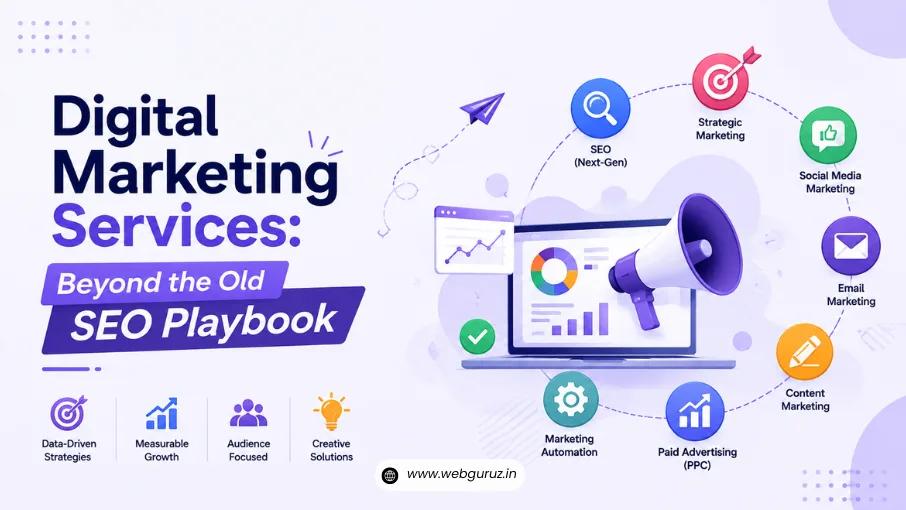
Google still processes billions of searches every day, but the way people search is changing fast. AI-powered search experiences, featured answers, and conversational tools now give users instant information without always sending them to a website. As a result, many businesses are seeing fewer clicks even when their rankings remain the same.
This shift has changed how businesses should approach online visibility. Digital Marketing Services can no longer rely on the old SEO playbook that focused only on rankings and keywords. Today’s strategy needs to help businesses stay visible across multiple search platforms, answer user questions clearly, and create content that both people and AI search engines trust.
A drop in website traffic does not always mean your SEO strategy has failed.
In many cases, your pages may still rank well, but users no longer need to click through to your website. AI-generated summaries, featured snippets, knowledge panels, and rich search results often provide enough information to answer simple questions. Search habits are also changing; some users start on Google, while others search through AI assistants, social media platforms, forums, or video content before visiting a website.
This shift is exactly why the old SEO playbook falls short. For years, SEO followed a familiar process: research keywords, create content around those terms, build backlinks, and work toward higher rankings. Those steps still matter, but they’re no longer enough on their own. Search engines have become much better at understanding context, user intent, and content quality; instead of rewarding pages that simply repeat keywords, they now prefer content that answers questions clearly and provides genuine value.
Many businesses continue using strategies that worked years ago, such as:
These methods can still produce results, but they miss how people actually search today. Traffic reports tell only part of the story; businesses need to understand where their audience is searching and how they’re finding information before deciding what to improve.

Customers no longer depend on one search engine to find information.
Someone researching a product might begin with Google, compare opinions on Reddit, watch a YouTube review, ask ChatGPT for recommendations, and then visit the company’s website.
This shift has made Search Everywhere Optimization an important part of modern marketing.
Instead of optimizing for a single platform, businesses need content that can be found across search engines, AI assistants, social platforms, online communities, and video platforms.
The goal is simple.
Wherever your audience searches, your business should have a chance to appear.
Search engines have become better at recognizing helpful content.
That means businesses cannot rely on publishing more articles just to increase page count. Every piece of content should answer a real question, solve a problem, or help someone make a better decision.
High-quality content usually includes:
This is why many businesses invest in SEO Content Writing Services that focus on user intent instead of simply placing keywords throughout a page.
When content genuinely helps readers, it also becomes more useful for search engines and AI-powered search tools.
Many businesses celebrate reaching the first page of Google.
While rankings remain important, they are only one part of the bigger picture.
A page can rank highly and still receive fewer clicks than it did a year ago because users may find the information they need before visiting the website.
Instead of asking, “Where do we rank?”
Businesses should ask:
Answering these questions provides a much clearer picture of online performance than rankings alone.

Artificial intelligence is changing how search engines understand and recommend content.
Instead of matching pages to exact keywords, AI systems analyze context, meaning, and the relationship between topics.
This is why AI SEO Services now focus on much more than keyword placement.
Businesses need content that is:
The better search engines understand your content, the more opportunities your business has to appear in search results, AI-generated answers, and other discovery platforms.
Successful SEO today is built around helping users first. That means understanding what people are searching for, why they are searching, and what information they expect to find. Businesses looking for professional SEO services should focus on strategies that improve overall visibility instead of chasing rankings alone.
A modern SEO strategy includes technical improvements, helpful content, strong website performance, clear site structure, and continuous optimization based on changing search behavior. The objective is to attract the right visitors and give them a reason to trust your business.
People have more ways to find information than ever before. They can compare answers across search engines, AI tools, videos, and online communities within minutes.
That means businesses need to build trust before they expect clicks.
One way to do this is by publishing content that is accurate, easy to understand, and based on real expertise. Search engines look for these signals when deciding which pages deserve visibility.
Many businesses looking for Expert SEO Services focus on creating content that answers important questions instead of writing pages only to target keywords. This approach helps build authority over time and supports stronger long-term performance.
Traditional SEO measured success by rankings, traffic, and backlinks.
Those metrics still matter, but AI-powered search is adding new ways for people to discover information.
Today, businesses also need to consider whether their content is being used to answer questions, referenced by AI systems, or helping users make decisions before they even visit a website.
This is where SearchGPT Solutions become relevant.
As conversational search continues to grow, businesses need content that explains topics clearly, answers questions directly, and provides trustworthy information that AI systems can understand and reference.
The goal is no longer just to appear in search results. It is to become part of the answers people receive.
Modern SEO is no longer just about optimizing individual pages.
It is about connecting topics, building authority, and helping search engines understand how different pieces of content relate to one another.
For example, a business that publishes content about SEO, digital marketing, content strategy, AI search, and website optimization creates a stronger knowledge base than one that focuses on isolated topics.
This is where Generative Engine Optimization tools help businesses improve content for AI-driven search experiences.
These strategies focus on clear structure, entity relationships, semantic relevance, and content that is easy for both people and AI systems to understand.
As AI search evolves, businesses that organize their content around complete topics instead of individual keywords will have a stronger advantage.

Search is only one part of the customer journey.
Someone might first discover your business through Google, read reviews on another platform, watch a video, subscribe to your emails, and finally make a purchase after seeing a social media post. Each interaction builds confidence, which is exactly why SEO can’t be treated as a standalone tactic anymore.
Search itself will keep changing. AI will improve. Customer behavior will evolve. New search platforms will appear. Businesses that lean on outdated tactics may find it harder to maintain visibility, even if they keep publishing content regularly.
A smarter approach relies on Digital Marketing Solutions that connect SEO with content, paid advertising, email, and social media instead of running them as separate activities, creating a more consistent experience and reaching people wherever they’re searching. It also focuses on understanding user intent, creating genuinely helpful resources, and adapting to new search technologies as they emerge.
This is why digital marketing works best as an ongoing, connected strategy rather than a one-time SEO project. Continuous improvement (across channels, not just within search) is what keeps businesses visible as behavior shifts.
The old SEO playbook helped businesses improve rankings, but today’s search environment demands much more. Success is no longer measured only by where a page ranks. It also depends on whether people can find your business across search engines, AI assistants, social platforms, and other digital channels.
Businesses investing in SEO Services India should focus on creating helpful content, improving user experience, and building long-term authority instead of chasing short-term ranking gains.
The future belongs to businesses that adapt.
Well-planned digital marketing services help brands stay visible, earn trust, and connect with customers wherever they choose to search.
Traffic can decline because AI search results, featured snippets, and other search features answer user questions before they visit a website. Search behaviour has also expanded beyond traditional search engines.
Search Everywhere Optimization is the practice of improving your brand’s visibility across multiple search platforms, including search engines, AI assistants, social media, forums, and video platforms.
AI search tools understand context and user intent rather than relying only on keywords. Businesses need clear, helpful, and well-structured content to improve their visibility.
Helpful content builds trust, answers user questions, and demonstrates expertise. It also helps search engines and AI systems better understand your website.
Businesses should focus on user intent, create high-quality content, improve website experience, and regularly update their SEO strategy to keep pace with changes in search technology.

Vedanshi
2026-10-23
7 min read
Your business uses HubSpot to manage customer relationships, but disconnected systems create data issues.
Read More
Vedanshi
2026-10-22
7 min read
Ask ChatGPT, Gemini, or Perplexity to recommend a supplier or a software tool, and you get a short list of names, not ten blue links.
Read More
Vedanshi
2026-10-21
7 min read
Building a website takes more than picking colors, dropping in images, and writing copy.
Read More