
 +1 (213) 715-5368
Vedanshi
2026-10-23
7 min read
Custom HubSpot Integrations: Benefits, Examples, and Best Practices
Your business uses HubSpot to manage customer relationships, but disconnected systems create data issues.
Read More
Published On:2026-08-04
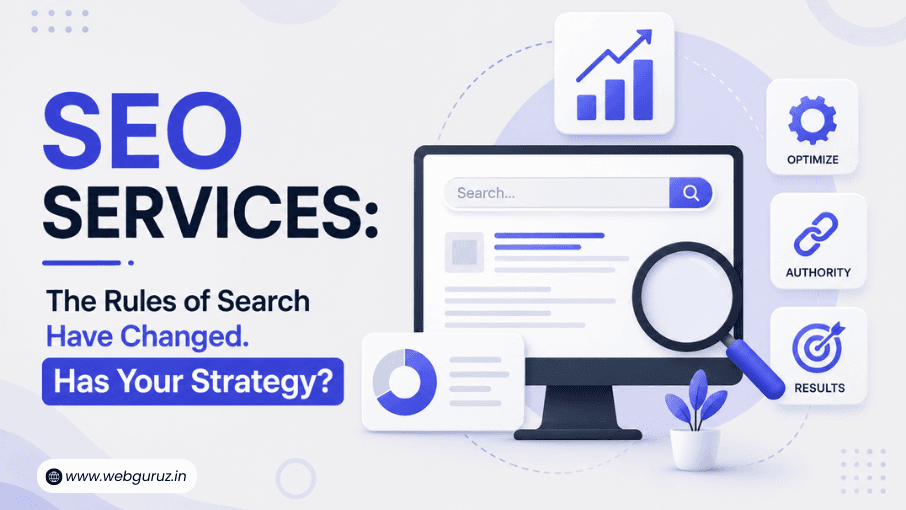
There was a time when better rankings almost guaranteed better business results.
That’s no longer true.
Today, a website can rank well and still lose customers, while competitors with lower visibility generate more inquiries. The difference isn’t always SEO; it’s how people search. Customers now compare AI-generated answers, reviews, videos, maps, and business profiles before deciding who to trust.
That’s why SEO services can no longer focus only on rankings. Success today depends on helping your business become visible, credible, and easy to choose across every modern search experience.
The biggest change in search isn’t Google’s technology; it’s customer behavior.
People no longer rely on a single Google search before making a decision. They compare AI-generated answers, reviews, Maps, videos, and business profiles, often deciding who they trust before they visit a website. Many local searches now begin with a dropped pin, helping users find businesses near a specific location instead of typing a traditional search query.
Across hundreds of SEO audits, we’ve noticed the same pattern. Businesses rarely lose visibility because their websites suddenly become outdated. They lose momentum because their strategy was built for how search worked a few years ago, not how people search today.
That’s why organic SEO services are about much more than improving rankings. They help businesses create helpful content, demonstrate expertise, and build trust wherever customers discover them.
According to Google, users perform trillions of searches every year, while the company continues investing in AI-powered search experiences to help people find better answers faster.
Today, visibility helps customers discover your business. Trust is what convinces them to choose it.
Traditional SEO vs. Modern SEO: What’s Actually Changed?
| Area | Traditional SEO | Modern SEO (2026 and Beyond) | Why It Matters |
|---|---|---|---|
| Primary Goal | Improve keyword rankings. | Help customers discover, trust, and choose your business across every search experience. | Rankings create visibility, but trust drives inquiries. |
| How Success Is Measured | Organic traffic, keyword positions, and backlinks. | Qualified leads, conversions, customer engagement, AI visibility, and revenue impact. | More traffic doesn’t always mean better business results. |
| Customer Journey | Google Search → Website → Contact Form. | Google, AI assistants, maps, videos, reviews, social platforms, and then your website. | Customers research businesses in multiple places before making contact. |
| Content Strategy | Publish pages targeting individual keywords. | Build topical authority by answering related questions across the entire customer journey. | Search engines increasingly reward expertise rather than isolated pages. |
| Optimization Focus | On-page SEO and link building. | Technical performance, user experience, structured data, content quality, brand authority, and trust signals. | Search evaluates the overall quality of a business, not just a webpage. |
| Role of AI | Minimal impact on strategy. | Content must be easy for AI-powered search engines and assistants to understand and recommend. | AI search is becoming part of how customers discover businesses. |
| What Builds Authority | High-ranking pages and backlinks. | Helpful content, real expertise, consistent business information, customer reviews, and brand credibility. | EEAT signals are becoming increasingly important across search experiences. |
| Winning Strategy | Optimize for Google’s algorithm. | Optimize for how real people search, compare, and make decisions. | Search engines increasingly reward businesses that serve users well. |
The biggest shift isn’t that SEO has become more technical. It’s that search has become more human.
Businesses that still optimize only for rankings are competing with yesterday’s strategy. The ones growing today are building authority, trust, and helpful experiences that serve both customers and modern search engines.
Some businesses assume that AI-generated search results have made traditional search optimization less important.
The opposite is happening.
AI systems still need reliable, high-quality information to generate accurate answers.
Much of that information comes from trusted websites with clear expertise and helpful content.
That is why organic SEO services remain one of the strongest long-term investments a business can make.
Unlike paid advertising, organic visibility continues to build over time. Helpful content, technical improvements, and strong user experience create assets that keep attracting customers long after they’re published
According to BrightEdge, 68% of all trackable website traffic comes from organic and paid search, with organic search remaining the largest single source of website traffic for many businesses.
The businesses earning the most organic visibility today aren’t necessarily publishing more content.
They’re publishing content that answers real questions better than anyone else.
People rarely search the way they did five years ago.
Instead of typing short phrases, they’re asking complete questions.
Examples include:
These conversational searches are becoming increasingly common because people now expect search engines and AI assistants to understand natural language.
That’s one reason answer engine optimization services have become an important part of modern search strategies.
Instead of optimizing content only for keywords, businesses also need to optimize it for questions, context, and complete answers.
The goal isn’t simply to rank. It’s to become the answer.

Artificial intelligence hasn’t made SEO obsolete. It’s changed what good SEO looks like.
Businesses still need authoritative websites, accurate information, and content that demonstrates genuine expertise. The difference is that AI-powered search experiences evaluate that content before recommending it to users.
That’s why AI SEO services focus on creating content that’s easy for both people and AI systems to understand. Clear structure, helpful answers, and strong topical authority improve visibility whether someone finds your business through Google Search, ChatGPT, Gemini, Perplexity, or another AI-powered platform.
Businesses preparing for the future of search should focus on more than rankings.
A strong strategy now includes:
Notice that none of these recommendations focus on “gaming” search engines.
They’re focused on creating a better experience for real people. That’s exactly where modern search is heading.
Typing a keyword and speaking a question are two very different behaviors.
Someone might type:
“best accounting software”
But when speaking to a voice assistant, they’re more likely to ask:
“What’s the best accounting software for a small manufacturing business?”
Those longer, conversational searches require content that answers complete questions rather than simply targeting short keywords.
That’s why Google voice search optimization has become an important part of modern SEO planning.
Businesses that write naturally, structure information clearly, and answer customer questions directly are far more likely to appear in voice-powered search experiences.
As AI assistants become more integrated into everyday devices, conversational content will continue to grow in importance.

Even businesses that sell nationally or internationally shouldn’t overlook local search.
Many customers still want to know where a business is located, whether it’s trusted in its community, and how other customers rate their experience.
Strong local SEO services help businesses build that local credibility while also strengthening broader search visibility.
Google Business Profile optimization, accurate business information, reviews, location pages, and local citations all contribute to how search engines evaluate trust.
Local visibility is no longer separate from SEO.
It’s one of the signals that supports overall authority.
Search has become too complex for businesses to rely on isolated tactics.
Content strategy, technical optimization, AI search readiness, analytics, user experience, and conversion optimization all need to work together.
That’s why many organizations choose to work with experienced SEO consultants rather than treating SEO as a one-time project.
A good consultant doesn’t simply recommend keywords.
They help businesses understand changing search behavior, identify growth opportunities, and adapt strategies before competitors do.
The focus shifts from short-term rankings to sustainable business growth.
One of the biggest mistakes businesses make is expecting SEO to do everything on its own.
Organic visibility builds steadily, but it isn’t the only way customers discover a business.
High-performing marketing strategies often combine SEO with paid advertising, helpful content, and continuous website improvements.
Working with a professional SEO services agency allows businesses to create a strategy where each marketing channel supports the others instead of competing for attention.
For example:
Together, they create a much stronger foundation for growth than any single channel can achieve alone.
A startup, a local retailer, and a national e-commerce brand all have different goals.
Their SEO strategies should reflect those differences.
Some businesses benefit from affordable starter plans focused on technical improvements and content creation.
Others require enterprise-level reporting, international optimization, or advanced AI search strategies.
That’s why SEO packages in India should never follow a one-size-fits-all model.
Similarly, businesses with limited marketing resources often achieve better results through focused small business SEO services that prioritize the highest-impact improvements first instead of trying to compete across every keyword immediately.
The objective isn’t to do more SEO. It’s to do the right SEO.

Organic visibility takes time to build.
Paid advertising delivers immediate exposure.
Rather than choosing between the two, many successful businesses combine both approaches.
While SEO strengthens long-term authority, PPC services help businesses reach high-intent customers who are ready to take action today.
Campaigns managed by an experienced Google Ads agency in India can also provide valuable insights into customer behavior, helping businesses identify which search terms, messages, and landing pages perform best.
Those insights often improve organic strategies as well.
When SEO and paid search work together, businesses gain both immediate visibility and sustainable long-term growth.
Search engines have become remarkably good at identifying content that genuinely helps users.
That means publishing dozens of average articles is no longer enough.
Businesses that consistently answer customer questions, explain complex topics clearly, and demonstrate real expertise are far more likely to earn visibility over time.
This is where content marketing services become an essential part of modern SEO. Every helpful guide, comparison article, case study, or educational resource strengthens topical authority and gives search engines more reasons to trust a website.
The same principle applies to your broader digital presence. Features like “Add Me to Search 2026” highlight how important it has become for businesses and professionals to maintain accurate, trustworthy information across the web. As AI-powered search continues to grow, consistent digital identity is becoming another signal that supports credibility.
More importantly, all of these efforts give customers more reasons to trust the business behind the content.
Search is becoming more intelligent, but it’s also becoming more human.
Customers expect faster answers, better experiences, and businesses they can trust. Search engines are evolving in exactly the same direction, rewarding content that demonstrates expertise, solves real problems, and helps people make confident decisions.
That’s why successful SEO services are no longer measured only by rankings or traffic. They’re measured by their ability to build authority, improve visibility across every search experience, and turn that visibility into meaningful business growth.
The businesses that understand this shift won’t simply keep pace with the future of search; they’ll help define it.
Yes. AI has changed how people discover information, but it hasn’t removed the need for high-quality websites. Modern SEO helps businesses become visible across search engines, AI assistants, and other discovery platforms.
Traditional SEO focused mainly on rankings and keywords. Modern SEO combines technical optimization, helpful content, user experience, AI search readiness, authority, and customer trust.
Absolutely. Businesses that publish genuinely helpful content, build local authority, and focus on customer experience can often outperform much larger competitors for highly relevant searches.
In many cases, yes. SEO builds long-term visibility, while paid advertising generates immediate traffic. Together, they create a balanced strategy that supports both short-term and long-term growth.
Search behavior changes constantly. Most businesses benefit from reviewing their strategy every few months to keep pace with algorithm updates, AI search developments, and changing customer expectations.
Vedanshi
2026-10-23
7 min read
Your business uses HubSpot to manage customer relationships, but disconnected systems create data issues.
Read More
Vedanshi
2026-10-22
7 min read
Ask ChatGPT, Gemini, or Perplexity to recommend a supplier or a software tool, and you get a short list of names, not ten blue links.
Read More
Vedanshi
2026-10-21
7 min read
Building a website takes more than picking colors, dropping in images, and writing copy.
Read More