
 +1 (213) 715-5368
Vedanshi
2026-10-23
7 min read
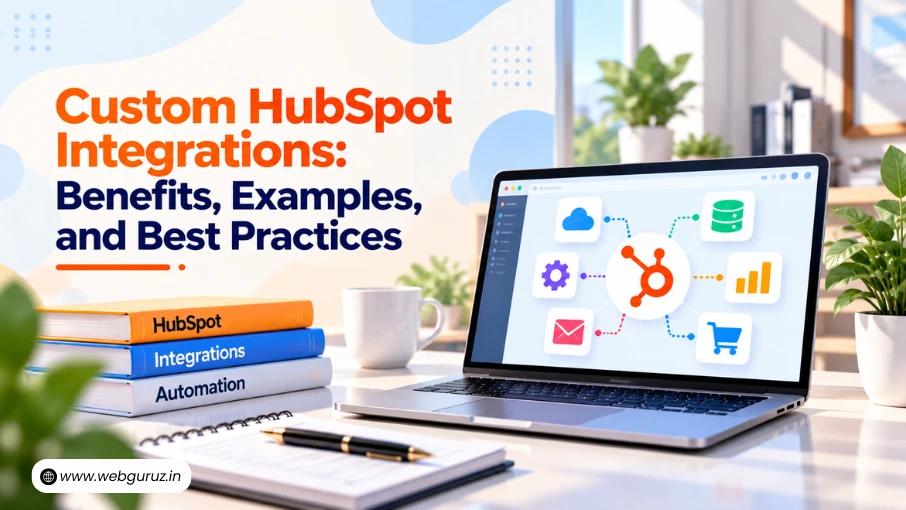
Custom HubSpot Integrations: Benefits, Examples, and Best Practices
Your business uses HubSpot to manage customer relationships, but disconnected systems create data issues.
Read More
Published On:2026-04-23
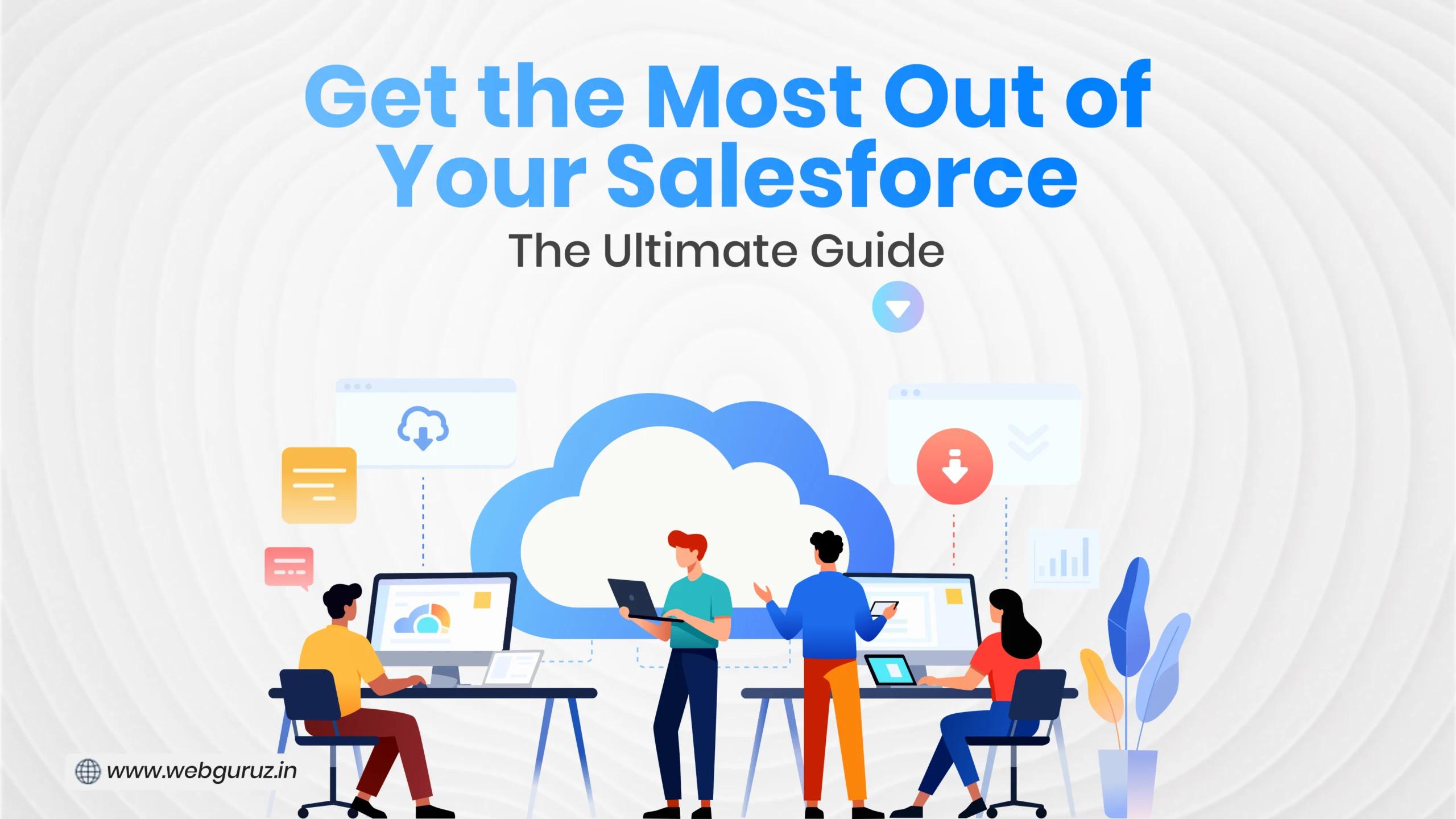
Salesforce is the world’s leading CRM platform. It is also one of the most underutilized enterprise investments in technology. Most businesses that purchase Salesforce licenses activate a fraction of the platform’s actual capability and quietly absorb the cost of everything they are not using.
The gap between what Salesforce can do and what most organizations actually experience is not a product problem. It is a configuration, strategy, and adoption problem. And in 2026, that gap has widened considerably, because the platform has evolved faster than most internal teams can track.
Agentforce is live and accelerating. Einstein AI is embedded across every cloud. Data Cloud is reshaping how customer records are unified. The businesses pulling ahead are not necessarily the ones with bigger Salesforce budgets; they are the ones with smarter Salesforce consulting services shaping how the platform is deployed, connected, and evolved over time.
This guide breaks down the Salesforce landscape in 2026: what is new, what each cloud actually delivers, and what it takes to build a Salesforce environment that drives real business outcomes.
Salesforce’s most significant shift in 2026 is the transition from a CRM that records what happened to a platform that acts on what is happening, in real time, autonomously, and at scale.
The driving force behind this is AgentForce. Launched in late 2024 and now in full stride with Agentforce 3.0, this platform enables organizations to build, customize, and deploy autonomous AI agents across every function, service, sales, marketing, commerce, and beyond. Agentforce 3.0 cut latency in half and introduced automatic model switching, ensuring that if one AI provider has an outage, the system instantly shifts to another without disrupting workflows.
According to Salesforce’s own research, AI adoption among CIOs has skyrocketed 282% over the past eighteen months. An estimated 41 percent of employee time is currently spent on repetitive, low-impact work, and Salesforce AI Agents 2026 are designed to absorb precisely that overhead, freeing human teams to focus on strategic, high-value activity.
These are the Salesforce Trends for 2026 that matter most: agentic AI moving from pilot to production, multimodal AI expanding agent capabilities to voice and visual inputs, and the Einstein Trust Layer ensuring that all of this automation operates within governance frameworks that enterprise risk teams can actually approve. Understanding where these trends intersect with your business is the first output of any serious Salesforce consulting services engagement.
The most expensive Salesforce mistake is not buying the wrong license; it is activating the right one without a structured onboarding process.
Salesforce Onboarding is not a training exercise. It is a strategic deployment phase. The decisions made in the first 90 days, how data is structured, which workflows are automated, how users interact with the system, and how the org connects to other platforms, determine the ceiling of the entire investment.
The most common failure patterns in Salesforce onboarding are well established: data models that do not reflect how the business actually sells, automation built around internal convenience rather than buyer behavior, and adoption programs that treat the CRM as a reporting tool rather than a selling tool. Sales teams stop using it, data quality degrades, and leadership loses confidence in the reports the platform was supposed to produce.
A structured onboarding approach, with clear process mapping, role-specific configuration, change management, and adoption tracking, is not a luxury. It is the minimum required for the platform to deliver on its commercial promise.

Salesforce is not one platform; it is a connected ecosystem of specialized clouds. Understanding what each one does and how they work together is essential for building a configuration that matches your business model.
The Sales Cloud Service is the commercial heart of the platform. It manages leads, contacts, opportunities, and pipeline, but in 2026, it does considerably more than track CRM records. Einstein Lead Scoring analyzes historical conversion data and ranks prospects by likelihood to close. Einstein Conversation Insights summarizes sales calls, extracts next steps, and surfaces deal risks automatically. Agentforce SDR agents can draft personalized outreach emails that adapt their tone based on industry-specific signals pulled from live CRM data.
For sales leaders, the result is a system that does not just record what reps do; it actively guides what they should do next.
Service Cloud Solution is where customer experience is built and defended post-sale. Einstein Bots handle repetitive inquiries across web, WhatsApp, SMS, and Slack, and, in 2026, support multilingual, multichannel conversations without human intervention. When cases escalate, Agentforce service agents handle complex issue resolution with full context from the customer’s history across every touchpoint.
Wiley, the publishing company, implemented Agentforce within Service Cloud and saw a greater than 40 percent increase in case resolution, outperforming their previous chatbot solution while freeing human agents for higher-complexity interactions.
This is where personalized email journeys in Salesforce are built and managed. Journey Builder sits at the center of this, a drag-and-drop campaign management tool that builds customer journeys across email, SMS, push, WhatsApp, and advertising, with AI decision-making embedded directly into the workflow.
Einstein Send Time Optimization ensures messages arrive when individual recipients are most likely to engage. Einstein Engagement Scoring predicts which contacts are at risk of disengaging before they unsubscribe. The result is a marketing engine that responds to individual behavior rather than broadcasting to segments and one that gets measurably smarter with every campaign cycle. Marketing Cloud users report a 53 percent increase in marketing-qualified leads on average, according to Salesforce’s own data.
Commerce Cloud powers both B2C and B2B digital commerce at scale. Einstein AI drives product recommendations that adapt in real time to browsing and purchase behavior. Headless architecture gives development teams the freedom to build unique storefront experiences without being constrained by the underlying platform. In 2026, Commerce Cloud integrates tightly with Data Cloud, meaning that inventory recommendations, promotional targeting, and customer segmentation all draw from a unified, real-time customer profile rather than siloed transactional data.
Salesforce Experience Cloud Services enables organizations to build branded portals, partner communities, and self-service sites that connect directly to the core Salesforce data model. Customer portals allow clients to raise cases, track orders, and access knowledge articles without calling support. Partner communities give channel teams visibility into shared pipelines, deal registration, and co-selling resources. Einstein AI personalizes what each user sees based on their role and history, making the portal feel built for them rather than deployed at them.
Salesforce Einstein Services is the intelligence layer embedded across every cloud, not a standalone product but the AI capability that elevates every other module. Predictive lead scoring, opportunity insights, activity capture, and conversation intelligence have all matured significantly in 2026. The Einstein Trust Layer, which prevents sensitive data from entering large language models, is now FedRAMP-approved, making AI-powered automation viable even in government and regulated enterprise environments.

Configure, Price, Quote brings discipline to the most chaotic part of the sales cycle. Complex pricing logic, product bundling rules, approval workflows, and contract generation are all centralized in a system that eliminates the spreadsheet-and-email quoting process that slows sales cycles and introduces pricing errors. Revenue Cloud, which incorporates CPQ functionality within Salesforce’s core platform, delivers a 20 percent faster quote-to-cash cycle on average, according to Salesforce’s internal benchmarks.
No Salesforce environment operates in isolation. ERP systems, marketing platforms, data warehouses, customer portals, and support tools all generate data that should flow into and out of Salesforce, cleanly, in real time, and in both directions. Salesforce Integration Services using MuleSoft and native API capabilities make this possible, eliminating the data silos that cause CRM records to drift from operational reality.
Without clean integration, AI features have nothing reliable to act on. The organizations seeing the strongest returns from Salesforce AI in 2026 are invariably those who invested in data architecture first, because the quality of the AI output is a direct function of the quality of the data flowing in.
Salesforce AI enablement is the practice of deploying Agentforce and Einstein capabilities in a structured, governed, and strategically sequenced way. It is not about flipping switches; it is about ensuring that data models are clean, that AI agents are configured for specific business outcomes, that governance frameworks are in place, and that the teams using the platform understand how to work alongside it.
Most internal Salesforce teams underestimate this complexity, particularly when scaling AI agents across multiple functions simultaneously. This is precisely where external Salesforce services expertise, specifically consultants who have guided organizations from AI pilot to production, becomes the most valuable investment on the roadmap.
The Salesforce platform is not difficult to activate. It is difficult to activate well. The difference between a Salesforce environment that genuinely drives revenue and one that sits underused is almost always a configuration and strategy gap, not a product gap.
Everything covered in this “Is Your Business Getting the Most Out of Salesforce? A Guide to Smarter Salesforce Consulting Services in 2026” guide points to the same conclusion: the Salesforce ecosystem in 2026 is more powerful, more interconnected, and more dependent on expert setup than at any point in its history. Getting AI features to work requires clean data. Getting clean data requires proper integration. Getting integration right requires an architectural view of the entire platform.
The organizations that maximize Salesforce ROI are not doing it alone. They work with experienced Salesforce consulting services partners who understand not just the technology, but the business processes the technology is designed to serve, and who can translate that understanding into a configuration that actually performs in production, not just in a demo.
Usually, it’s not the tool; it’s how it’s set up. Messy data, poor integration, and low team adoption mean most features just never get used.
They make Salesforce work the way your business actually runs, setting it up properly, connecting tools, and making sure it delivers real results.
Typically, a couple of months. It depends on complexity, but getting the setup right early makes a big difference later.
Yes, if your data is clean. Without that, even the best AI tools won’t give you useful insights.
When things feel messy, low adoption, bad data, or systems not talking to each other. Fixing it early is always easier than fixing it later.
Vedanshi
2026-10-23
7 min read
Your business uses HubSpot to manage customer relationships, but disconnected systems create data issues.
Read More
Vedanshi
2026-10-22
7 min read
Ask ChatGPT, Gemini, or Perplexity to recommend a supplier or a software tool, and you get a short list of names, not ten blue links.
Read More
Vedanshi
2026-10-21
7 min read
Building a website takes more than picking colors, dropping in images, and writing copy.
Read More