
 +1 (213) 715-5368
Vedanshi
2026-10-23
7 min read
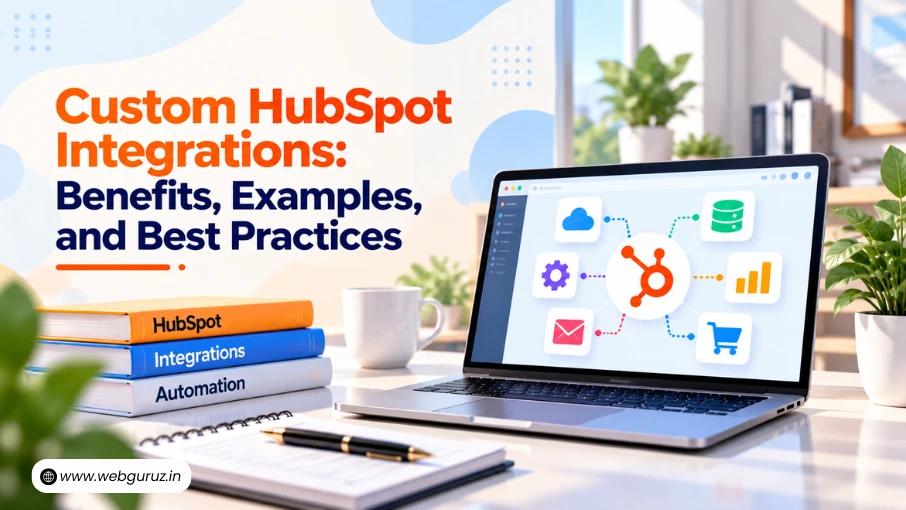
Custom HubSpot Integrations: Benefits, Examples, and Best Practices
Your business uses HubSpot to manage customer relationships, but disconnected systems create data issues.
Read More
Published On:2026-05-05
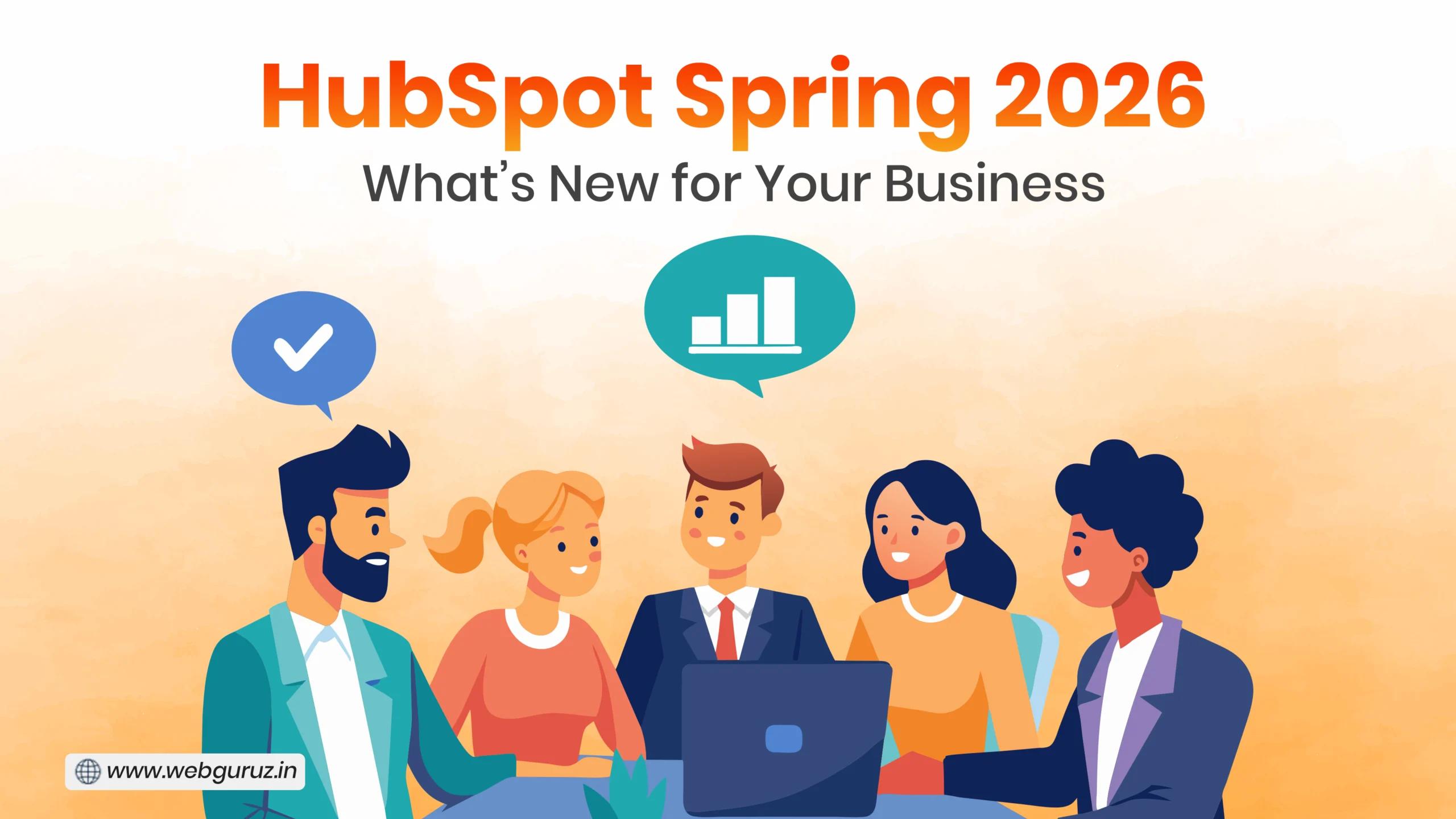
HubSpot’s Spring 2026 Spotlight was not a typical product release. There were no flashy rebrand announcements, no pricing restructure, and no new product category launched from scratch. What happened was quieter and more consequential than any of those things.
HubSpot moved the CRM from a system of record to a system of action.
The distinction matters more than it might first appear. A system of record stores what happened, deals logged, contacts captured, emails sent, and calls summarized. A system of action uses that context to drive what happens next, autonomously, in real time, without waiting to be asked. That is the shift HubSpot made in the spring of 2026, and it changes how every team that runs on the platform should think about their configuration, their data architecture, and the HubSpot services they need to get there.
This guide breaks down what changed across every Hub, what each change means in practice for revenue teams, and why the companies that capitalize on this release will be the ones that invested in the right foundation before the features arrived.
| Hub | Headline Change | Business Impact |
|---|---|---|
| Breeze AI | Six autonomous AI agents now embedded across the platform | AI moves from assistant to operator and takes action, not just suggestions |
| Smart CRM | Self-generating data, Smart Insights, Flexible Views | CRM updates itself; every team sees the data they need, not a generic record |
| Data Hub | Data Studio + AI-powered Data Quality Tools | Connects every data source; AI performance improves as data quality improves |
| Sales Hub | Prospecting Agent, Buying Group support | Signal-based selling replaces volume-based outreach |
| Service Hub | The customer agent handles full front office | Scale support capacity without scaling headcount |
| Marketing Hub | Marketing Studio, AI Email, AEO, The Loop | Campaigns built for an AI-influenced buyer journey |
| Content Hub | AEO tracking + AI content generation | Visibility now measured in AI answer citations, not just search rankings |
| Commerce Hub | AI-powered CPQ | Quotes generated in minutes, not days |

Not every update in a platform release deserves equal attention. These five are the ones that fundamentally change how revenue teams operate, not incremental improvements, but structural shifts.
What changed: Breeze AI is no longer a productivity add-on. It is the operating layer running through every Hub, with six autonomous agents that take action based on signals rather than waiting for human instruction.
Why it is monumental: For the last decade, AI in CRM has meant autocomplete, content suggestions, and summary generation. Spring 2026 introduces agents that actually do things, source leads, qualify prospects, resolve support tickets, enrich contact records, and route work without manual intervention.
| Agent | What It Does | Which Team Benefits Most |
|---|---|---|
| Prospecting Agent | Monitors account signals, generates timed outreach | Sales |
| Customer Agent | Handles calls, chat, lead qualification, meeting booking | Service / Front Office |
| Data Agent | Queries CRM, transcripts, email, and web for real-time insights | Revenue Ops |
| Breeze Assistant | Context-aware help across every Hub | All teams |
| Custom Assistants | Purpose-built agents trained on your business knowledge | Any team with repetitive workflows |
| Breeze Marketplace | Pre-built agents for social, research, content, and more | Marketing / Content |
The catch: Every agent’s output quality depends entirely on the data it reads. A poorly structured CRM does not get smarter with AI, it gets confidently wrong faster. This is the foundational conversation in every HubSpot Services engagement in 2026, and it is why data architecture should always be audited before agent configuration begins.
What changed: The Prospecting Agent in Sales Hub does not run sequences on a calendar. It monitors CRM signals and external account data (job changes, funding events, website visits, content engagement) and triggers outreach when real buying momentum is detected.
Why it is monumental: The shift from activity volume to signal precision is one of the most significant changes in B2B sales methodology in years. One well-timed email based on a genuine signal consistently outperforms ten untimed emails in a drip sequence. HubSpot has now built that insight into the infrastructure, and activating it correctly is one of the clearest quick wins available in any HubSpot Services engagement focused on Sales Hub.
The old model ran sequences on a calendar regardless of what was actually happening at the account. The new model triggers outreach when a buying signal is detected, a job change, a funding announcement, a cluster of pricing page visits, a spike in content engagement. Single leads tracked through a linear pipeline give way to buying groups managed at the account level. And instead of reps manually researching accounts before reaching out, the prospecting agent researches, synthesizes, and drafts the outreach automatically. Volume stops being the proxy for pipeline health. Timing and signal quality take its place.
What changed: Data Hub introduces Data Studio, a connector that brings external data sources (warehouses, billing systems, product databases, and third-party platforms) into HubSpot, and AI-powered Data Quality Tools that automatically fix duplicates, fill missing fields, and correct inconsistencies.
Why it is monumental: Of all the Spring 2026 updates, Data Hub has the most leverage on every other capability. AI agents are only as intelligent as the data they read from. A CRM connected to 20 percent of your customer data produces AI insights at 20 percent quality. Data Hub closes that gap, and scoping it correctly is the first conversation in any serious HubSpot Services engagement this year.
Without it, AI agents read only what lives in the native CRM, a fraction of the actual customer picture. Duplicate records distort lead scores and segmentation. Missing fields require manual enrichment. BI reports have to be exported to external tools before anyone can analyze them. With Data Studio in place, AI agents access a unified record that spans every system the business runs on. Automated deduplication runs continuously. Smart Properties update themselves based on observed interactions. And analysis happens directly within HubSpot, without the export cycle that adds latency to every reporting decision.
This is the most underinvested area in most HubSpot installations and the one that a qualified HubSpot consultant will address first before any other configuration work begins.
What changed: Content Hub and Marketing Hub now include AEO tools, allowing teams to track which prompts relevant to their business are being answered by AI systems (ChatGPT, Perplexity, and Gemini); monitor brand citation rates; analyze share of voice; and receive optimization recommendations.
Why it is monumental: Search engine optimization ranks you in a list of ten blue links. AEO gets you selected as the trusted answer in an AI-generated response, a fundamentally different form of visibility that is becoming the primary discovery channel for an increasing share of B2B buyers.
The contrast is stark. Traditional SEO optimizes for keyword rankings and measures success by position one through ten in Google results. AEO optimizes to be cited inside AI-generated answers and measures success by brand mention rate in LLM responses. Content built for traditional search is structured around search intent. Content built for AEO is structured to be directly quotable, concise, authoritative, and extractable by AI systems that synthesize rather than list. And while domain authority has been the competitive moat in SEO for years, AEO is still a relatively open field in 2026. Early movers are establishing citation share that late entrants will find increasingly difficult to displace.
Working with a RevOps agency partner and a certified HubSpot developer to build the content architecture that performs in both environments simultaneously is one of the highest-leverage HubSpot services investments a marketing team can make this year and one that is significantly easier to get right from the start than to retrofit later.
What changed: Commerce Hub now includes AI-powered CPQ (Configure, Price, Quote), generating branded quote documents in minutes by automatically handling product configuration, pricing logic, and approval routing.
Why it is monumental: For most B2B organizations, the quoting stage is where deal momentum goes to die. A prospect who is ready to sign on Tuesday afternoon should not be waiting until Thursday because someone needs to manually build a quote through four internal systems. AI-powered CPQ eliminates that friction entirely.
The previous reality for most teams was a rep building a quote manually in a spreadsheet or a disconnected quoting tool, introducing pricing errors through manual configuration, routing approval via an email thread, formatting and branding the document separately, and delivering it 24 to 48 hours after the conversation that closed it in principle. With AI-powered CPQ in Commerce Hub, the quote is generated from the conversation context itself. Pricing logic is applied automatically and consistently. Approval is triggered and tracked within HubSpot. The branded document is ready in minutes, not days.
HubSpot Website Development is relevant here too: for teams using Commerce Hub to power transactional flows on HubSpot-hosted pages, the site architecture needs to be built with commerce pathways integrated into the CRM data model, not treated as a separate system. Getting this right is increasingly part of what comprehensive HubSpot Services for Commerce Hub actually covers.
Understanding the updates is one thing. Knowing what action to take as a result is another. Here is the most important configuration priority for each Hub following Spring 2026.
For Breeze AI, audit your CRM data quality before enabling any agent; garbage in, garbage out. For the Smart CRM, enable Smart Insights and review which contact and company properties need enrichment before AI can act on them reliably. For Data Hub, map every system your business runs on and build a Data Studio integration plan that connects them. For Sales Hub, define your account signal library, what specific signals indicate genuine buying intent in your market, and how are they mapped to CRM properties?
For Service Hub, build or audit your knowledge base before activating the Customer Agent, its response quality is entirely dependent on what it can read. For Marketing Hub, run an AEO audit: are you currently appearing in AI-generated answers for the prompts your buyers are actually asking? For Content Hub, restructure pillar content for AI citation, direct answers in opening paragraphs, followed by supporting context. And for Commerce Hub, map your current quote-to-cash process and identify every step that AI-powered CPQ can eliminate.

The companies that benefit most from Spring 2026 will not be the ones that turn features on the fastest. They will be the ones that understand what this release is really asking of them.
HubSpot is not asking you to use more tools. It is asking you to build a better operating environment, one where data is unified, systems are connected, and AI agents have the context they need to act with confidence rather than produce approximations. That is an infrastructure conversation, not a software conversation. And it is precisely the conversation that experienced HubSpot services teams are having with clients right now, before features are enabled, not after.
Before enabling any Spring 2026 features, ask yourself these questions honestly. Are your contact and company records complete, current, and deduplicated? Are your key business systems (billing, product, and support) connected to HubSpot? Is your knowledge base comprehensive enough for the customer agent to resolve inquiries accurately? Have you defined what buying signals matter for your specific market and mapped them to CRM properties? Is your content structured for AI citation, or only for traditional search indexing? Are your CRM permission models clean enough for AI agents to operate safely within them? And are you actively using all the HubSpot Hubs included in your subscription?
If the honest answer to most of those questions is “no” or “partially,” the most valuable thing you can do before enabling any Spring 2026 features is work with a qualified HubSpot consultant to close those gaps. Engaging the right HubSpot Services partner at this stage, rather than after a misconfigured rollout, is the difference between a smooth adoption and a costly reset. The features perform in proportion to the foundation underneath them.
Everything covered in this HubSpot Spring 2026: What the New Release Means for Your Business Across Every Hub guide points to the same conclusion: HubSpot did not just launch new features. It redefined what CRM infrastructure is supposed to do.
The shift from a system of record to a system of action is not a marketing phrase. It is an architectural change with downstream implications for how every Hub is configured, how data is structured, and how HubSpot services engagements need to be scoped to deliver on what the platform now promises.
The technology is ready. The question is whether your data foundation and configuration are ready for the technology. That gap, between having access to a feature and being able to use it effectively, is exactly where expert HubSpot services make the difference.
Not necessarily across the board, but many of the most powerful features (like AI agents, Data Hub, and CPQ) are tier-dependent. The bigger question isn’t just access, though; it’s whether your current setup is ready to use them effectively. Most teams hit limitations in their data and structure before they hit plan limits.
Your data. Always your data. If your CRM has duplicates, missing fields, or disconnected systems, AI agents will act on incomplete or incorrect information. That doesn’t just reduce effectiveness; it can actively create bad outcomes faster. A data audit is step one, every time.
In most cases, yes, and it’s not even close. Buyers respond to relevance and timing, not volume. A well-timed message triggered by a real buying signal will outperform generic sequences almost every time. The challenge is defining the right signals for your business and mapping them correctly inside HubSpot.
It shifts your focus from “ranking on Google” to “being the answer.” That means your content needs to be clearer, more direct, and easier for AI to extract and cite. It also means you’re competing for visibility in places where there’s no page two, just the answer itself.
Yes, but not all at once. The advantage small teams have is agility. Start with high-impact areas like data quality, signal-based selling, or a single AI agent use case. You don’t need to implement everything; you need to implement the right things in the right order.
Vedanshi
2026-10-23
7 min read
Your business uses HubSpot to manage customer relationships, but disconnected systems create data issues.
Read More
Vedanshi
2026-10-22
7 min read
Ask ChatGPT, Gemini, or Perplexity to recommend a supplier or a software tool, and you get a short list of names, not ten blue links.
Read More
Vedanshi
2026-10-21
7 min read
Building a website takes more than picking colors, dropping in images, and writing copy.
Read More