
 +1 (213) 715-5368
Vedanshi
2026-10-23
7 min read
Custom HubSpot Integrations: Benefits, Examples, and Best Practices
Your business uses HubSpot to manage customer relationships, but disconnected systems create data issues.
Read More
Published On:2026-08-04
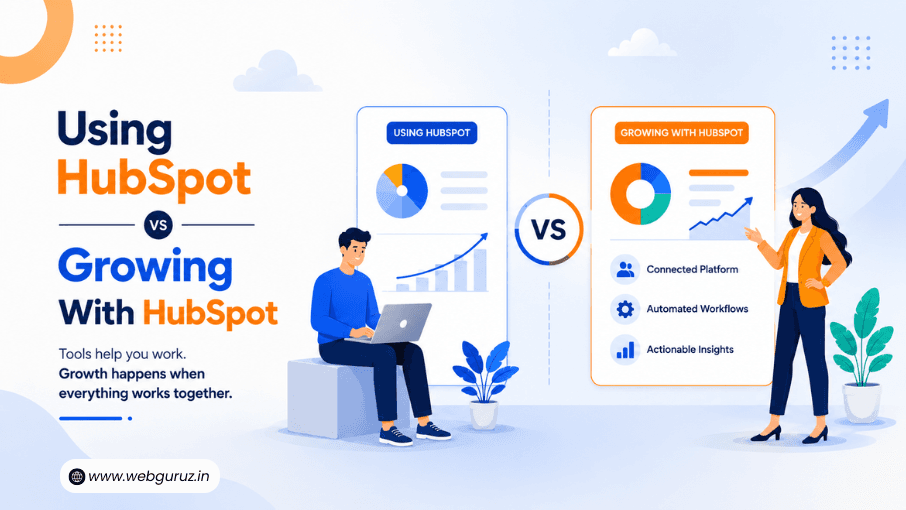
Buying HubSpot is one of the easiest decisions a growing business can make.
Making it work the way your business actually needs is much harder.
Every year, thousands of companies invest in HubSpot to improve marketing, sales, customer service, and operations. The platform is powerful, flexible, and constantly evolving with new AI capabilities, automation tools, and reporting features.
Yet many businesses still struggle to see the return they expected.
Sales teams continue updating spreadsheets.
Marketing creates campaigns that don’t generate qualified leads.
Customer data becomes inconsistent.
Reports don’t answer leadership’s questions.
And despite paying for an advanced CRM, many teams only use a small percentage of what the platform can actually do.
This is where HubSpot Consulting becomes valuable.
The goal isn’t simply to help businesses use HubSpot. It’s to help them build better processes, connect their teams, and create a system that supports long-term growth.
Because owning HubSpot and growing with HubSpot are two very different things.

Many businesses think implementing a CRM is the biggest milestone; in reality, however, implementation is only the first step.
The real challenge begins once your teams start using it every day.
Across countless CRM implementation projects, one pattern appears again and again. Companies rarely struggle because HubSpot lacks features. They struggle because nobody has designed how those features should work together.
Marketing captures leads one way. Sales follows a different process. Customer success stores information somewhere else. Leadership wants reports that nobody knows how to build.
Over time, every department creates its own way of working. Instead of becoming the single source of truth, the CRM slowly turns into another system that teams work around instead of with.
That’s why successful businesses don’t view HubSpot as software; they treat it as the operational foundation of the business.
One of the most common questions businesses ask before investing in HubSpot is:
“Which HubSpot hub do I need?”
It’s an understandable question. HubSpot offers multiple Hubs, each designed for different parts of the customer journey. But it usually isn’t the right place to start. A better question is
“What do we want our business to achieve?”
Once those questions are answered, choosing the right Hub becomes much easier. Technology should support your business strategy. It shouldn’t define it.
Businesses often compare HubSpot implementations by counting features. But the truth is that those numbers rarely tell the full story. A successful CRM isn’t measured by how much has been configured.
It’s measured by how easily people can do their jobs.
If your sales team spends less time on manual updates, that’s progress.
If marketing can see which campaigns generate revenue instead of just website traffic, that’s progress.
If customer service has complete visibility into previous conversations, that’s progress.
The best HubSpot implementations don’t feel complicated; in fact, they make work simpler.
That’s why experienced HubSpot consulting services focus less on adding features and more on solving business problems. Every workflow, automation, dashboard, and report should have a clear purpose that supports the way the business operates, not simply because the platform makes it possible.
Many businesses believe they’re getting value from HubSpot simply because they’re using it every day.
But using a CRM and growing with it are not the same thing.
Think of it this way. Buying a modern car doesn’t automatically make someone a better driver. In the same way, owning a powerful CRM doesn’t automatically improve sales, marketing, or customer experience.
The businesses seeing the greatest return from HubSpot aren’t necessarily using more features.
They’re using the right features in the right way.
Instead of treating HubSpot as another piece of software, they build their processes around it. Every team works from the same customer data, automation removes repetitive tasks, and reporting helps leaders make faster decisions.
The difference becomes clear when you compare the two approaches.
| Simply Using HubSpot | Growing With HubSpot |
|---|---|
| Teams work independently | Sales, marketing, and service share the same customer journey |
| Manual tasks consume valuable time | Automation handles repetitive work |
| Reports focus on activity | Reports focus on revenue and business performance |
| Customer data exists in multiple places | One connected source of truth |
| Teams react to problems | Teams identify opportunities before they become problems |
| Features are enabled | Features are adopted and continuously improved |
The table isn’t about using more tools.
It’s about creating a business that works more efficiently because every team is moving in the same direction.
Businesses don’t usually realize they’ve outgrown their CRM overnight. It happens gradually.
Eventually, people stop relying on HubSpot as their primary source of information.
If any of these situations sound familiar, it may be time to review how your platform is being used.
Common signs include:
None of these problems mean HubSpot is the wrong platform.
More often, they indicate that the business has grown while its CRM strategy hasn’t kept pace.
This is where HubSpot Automation Services can make a significant difference.
Instead of asking employees to complete repetitive tasks manually, automation helps create consistent processes that save time, reduce errors, and keep customer information up to date.
Customers don’t think in departments; they don’t know where marketing ends and sales begins. They simply expect every interaction with your business to feel connected.
If they download a guide today, speak with a salesperson tomorrow, and contact support next week, they expect every conversation to continue naturally.
Disconnected systems make that difficult.
Marketing may know which campaign generated a lead.
Sales may know which products were discussed.
Customer service may understand previous support requests.
But if those insights never come together, the customer experiences unnecessary friction.
This is why businesses invest in HubSpot services instead of isolated tools. A connected platform allows every department to work from the same customer information, creating smoother handoffs and more consistent experiences from the first enquiry to long-term customer success.
According to HubSpot’s State of Marketing research, organizations continue to prioritize connected customer experiences because buyers increasingly expect personalized interactions across every stage of their journey. Businesses that remove friction between teams are better positioned to build trust and long-term relationships.

As businesses grow, one challenge becomes increasingly common.
Every department measures success differently. Marketing celebrates lead generation, sales focuses on closing deals, customer success works to improve retention, and leadership wants predictable revenue.
Each goal is important. The problem is that they often operate independently.
That’s why many growing organizations are investing in RevOps Consulting Services.
Rather than optimizing one department at a time, Revenue Operations focuses on improving how every team works together. It creates shared processes, shared reporting, and shared accountability across the entire customer journey.
When marketing, sales, and customer success work from the same data, decisions become faster, reporting becomes more accurate, and growth becomes easier to measure.
The businesses achieving the strongest results from HubSpot aren’t simply using a CRM.
They’re building a revenue engine.
Many businesses think the hardest part of a HubSpot project is launching the platform.
In reality, that’s when the real work begins.
Every growing business changes over time. New products are introduced. Sales processes evolve. Teams expand. Customer expectations shift. AI capabilities improve.
Your CRM should evolve alongside your business.
That’s why experienced HubSpot Consultants don’t disappear after implementation. They continue refining automation, improving reporting, reviewing workflows, and helping teams adopt new features as the platform grows.
HubSpot is updated regularly. Businesses that review and improve their setup consistently are far more likely to get long-term value than those that leave it unchanged for years.
One of the biggest reasons CRM projects struggle isn’t the technology.
It’s adoption.
Employees naturally return to familiar habits if they aren’t confident using a new system.
Some continue tracking information in spreadsheets.
Others avoid automation because they don’t fully understand it.
Over time, data becomes incomplete, reporting becomes unreliable, and confidence in the platform begins to fall.
That’s why HubSpot Onboarding should be viewed as more than a one-time training session.
Successful onboarding helps every department understand not only how to use HubSpot, but why each process exists.
For larger organizations, structured HubSpot onboarding services also ensure that new employees can adopt the platform quickly, keeping processes consistent as teams grow.
A CRM delivers value only when people actually use it.

HubSpot has changed dramatically over the past few years.
Today, businesses aren’t simply managing contacts and deals.
They’re using AI to create content, automate repetitive work, improve reporting, and help teams make faster decisions.
Features like HubSpot AI are helping sales and marketing teams spend less time on manual tasks and more time building customer relationships.
At the same time, new tools like the HubSpot AEO Grader reflect another important shift.
Businesses are no longer optimizing only for traditional search engines.
They’re also preparing their websites and content for AI-powered search experiences, where customers increasingly expect direct, trustworthy answers instead of long lists of search results.
Modern consulting isn’t just about configuring software anymore.
It’s about helping businesses adapt to the way customers discover, evaluate, and choose companies today.
As businesses become more sophisticated, their technology needs usually become more complex as well.
Some organizations need to connect HubSpot with accounting software, ERP platforms, e-commerce systems, or customer support tools.
Others want to redesign their website, migrate from another CMS, or build custom functionality inside HubSpot.
This is where HubSpot integrations and data become especially important.
When systems exchange information accurately, teams spend less time correcting data and more time making informed decisions.
Businesses planning a website redesign or platform upgrade may also benefit from a CMS migration, ensuring existing content, SEO performance, and customer data remain intact during the transition.
As requirements become more advanced, many organizations also invest in HubSpot development services to build custom solutions that support their unique sales, marketing, and operational workflows.
The goal isn’t to make HubSpot more complicated.
It’s to make it work better for the business.
One mistake many businesses make is assuming that once HubSpot is configured, it never needs to be reviewed again.
In reality, every CRM benefits from regular optimization.
As new campaigns launch, products change, and teams grow, workflows that once worked well may become outdated.
A periodic HubSpot audit helps identify duplicate data, broken automations, outdated reports, unused properties, and opportunities to simplify processes before they begin affecting performance.
Just as businesses review financial performance regularly, reviewing the health of a CRM should become part of ongoing business operations.
Small improvements made consistently often produce far better results than major overhauls every few years.
Buying HubSpot is an investment; growing with HubSpot is a strategy.
The businesses seeing the strongest results don’t necessarily have the most Hubs, the longest list of workflows, or the most advanced dashboards.
They have something far more valuable.
Technology supports those outcomes, but it doesn’t create them on its own.
That’s the real difference between simply using HubSpot and building a business that grows with it.
HubSpot consulting helps businesses improve how they use HubSpot by aligning CRM strategy with sales, marketing, customer service, and operational goals. It focuses on business outcomes, not just software setup.
Many businesses benefit from consulting when implementing HubSpot, scaling operations, improving automation, integrating other systems, or trying to increase CRM adoption across teams.
Onboarding helps teams learn how to use the platform, while consulting focuses on improving business processes, automation, reporting, and long-term growth strategies.
A HubSpot audit identifies issues such as duplicate data, outdated workflows, reporting gaps, and unused features, helping businesses keep their CRM accurate and efficient as they grow.
Yes. HubSpot continues to expand its AI capabilities, helping businesses automate tasks, improve content creation, enhance reporting, and prepare for modern search experiences through tools like HubSpot AI and the HubSpot AEO Grader.
Vedanshi
2026-10-23
7 min read
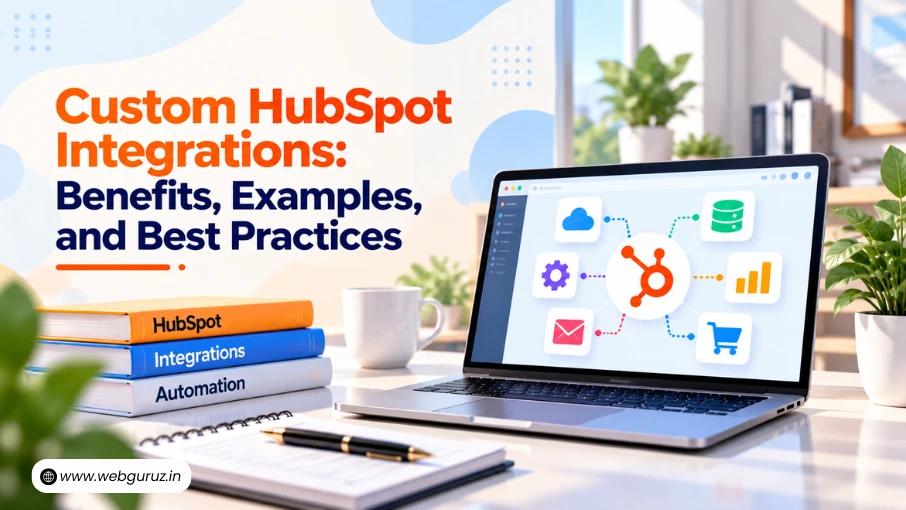
Your business uses HubSpot to manage customer relationships, but disconnected systems create data issues.
Read More
Vedanshi
2026-10-22
7 min read
Ask ChatGPT, Gemini, or Perplexity to recommend a supplier or a software tool, and you get a short list of names, not ten blue links.
Read More
Vedanshi
2026-10-21
7 min read
Building a website takes more than picking colors, dropping in images, and writing copy.
Read More