
 +1 (213) 715-5368
Vedanshi
2026-10-23
7 min read
Custom HubSpot Integrations: Benefits, Examples, and Best Practices
Your business uses HubSpot to manage customer relationships, but disconnected systems create data issues.
Read More
Published On:2026-06-29
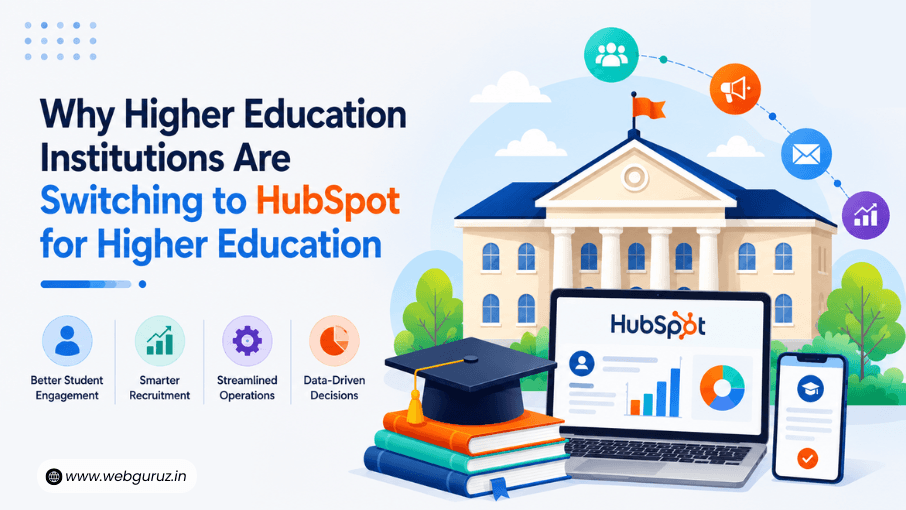
Choosing the right CRM is no longer just an IT decision for colleges and universities. It has become a strategic investment that affects student recruitment, admissions, marketing, alumni engagement, and even long-term institutional growth.
Today’s students expect fast responses, personalized communication, and a seamless digital experience. If an institution is still relying on spreadsheets, disconnected software, or outdated systems, meeting those expectations can be difficult.
This is one of the biggest reasons why many institutions are adopting HubSpot for higher education. Instead of managing inquiries, applications, emails, and campaigns across multiple platforms, HubSpot brings everything together in one place, helping teams work more efficiently while creating a better experience for prospective and current students.
The shift toward smarter technology is happening across industries. According to McKinsey’s State of AI report, 78% of organizations now use AI in at least one business function, showing just how important connected data and automation have become.
If your institution is exploring a modern higher education CRM, here’s what HubSpot offers and why so many universities and colleges are making the switch.
To understand the bigger picture, it’s worth exploring Why Higher Education Institutions Are Switching to HubSpot for Higher Education (And What It Solves). The answer goes far beyond replacing an outdated CRM. It’s about creating a connected system that streamlines recruitment, admissions, communication, and student engagement while giving staff the tools they need to deliver a better experience.
Most educational institutions don’t struggle because they lack dedicated staff; they struggle because their systems don’t communicate with one another.
Admissions teams, marketing departments, student services, and alumni offices often use different tools, making it difficult to get a complete view of every student interaction.
Some of the most common challenges include:
A prospective student fills out an inquiry form but doesn’t hear back for days because the request gets buried in a shared inbox. By then, they may have already applied elsewhere.
Contact details might live in one system, marketing emails in another, and admissions notes somewhere else entirely. This fragmentation makes it harder to deliver personalized communication.
From sending follow-up emails to assigning inquiries, many repetitive tasks are still handled manually, leaving staff with less time to focus on student engagement.
Without centralized data, leadership teams often struggle to answer basic questions like:
As competition for student enrollment grows, institutions need technology that helps them respond faster and make better decisions.
Many CRM platforms store contact information, but modern institutions need much more than a digital address book.
A CRM for higher education should support recruitment, admissions, marketing, communication, and relationship management throughout the student journey.
This is where HubSpot stands out.
Instead of functioning as a standalone database, HubSpot combines CRM capabilities with automation, marketing tools, reporting, and AI-powered features in a single platform.
For example, imagine a prospective student downloads a course brochure. HubSpot can automatically:
This level of automation helps institutions respond quickly while reducing repetitive work for staff.
For universities looking for a flexible HubSpot CRM for universities, the platform also scales across departments, making it easier for admissions, marketing, and student support teams to collaborate.

A student’s relationship with an institution doesn’t begin on the first day of class; it starts with their very first interaction.
One of HubSpot’s biggest strengths is its ability to support HubSpot student lifecycle management, giving teams visibility into every stage of that journey.
A prospective student visits your website, downloads a prospectus, or registers for an open day. HubSpot captures that interaction and stores it in a centralized contact record.
As students explore courses and compare institutions, automated email sequences and personalized content can keep them engaged without requiring constant manual follow-up.
Admissions teams can track communications, monitor progress, and ensure applicants receive timely updates throughout the process.
Once accepted, students can receive onboarding emails, orientation reminders, and important announcements through automated workflows.
HubSpot can continue supporting communication with enrolled students through newsletters, event invitations, and targeted updates based on their interests or program.
Even after graduation, institutions can nurture alumni relationships, promote events, encourage donations, and maintain long-term engagement from the same CRM platform.
This end-to-end visibility helps create a smoother experience while ensuring no important interaction falls through the cracks.

The advantages of HubSpot for higher education extend well beyond contact management.
Automated emails, reminders, and workflows help institutions respond faster while maintaining a personal touch.
Admissions, marketing, and student services teams can work from the same data instead of maintaining separate records.
Using HubSpot Marketing Hub and HubSpot marketing automation, institutions can create targeted campaigns based on student interests, engagement levels, or geographic location.
Built-in HubSpot AI tools assist with content creation, workflow optimization, and operational efficiency, helping teams accomplish more with fewer manual tasks.
Whether an institution recruits hundreds or thousands of students each year, HubSpot provides the flexibility to scale processes without dramatically increasing administrative work.
With HubSpot CRM Automation Services, repetitive tasks like assigning leads, sending follow-up emails, and updating records can happen automatically, allowing staff to focus on higher-value interactions.
Not all CRM platforms offer the same capabilities. The table below highlights some of the practical differences institutions should consider.
| Traditional Higher Education CRM | HubSpot for Higher Education |
|---|---|
| Student information often lives across multiple disconnected systems | Centralizes prospect, student, and alumni data in one platform |
| Manual follow-ups for inquiries and applications | Automated workflows and personalized communication |
| Marketing and admissions operate separately | Marketing and admissions teams share the same CRM data |
| Limited visibility into the student journey | Tracks interactions across the entire student lifecycle |
| Reporting requires combining data from different tools | Real-time dashboards and centralized reporting |
| Difficult to personalize outreach at scale | Easy audience segmentation and targeted communication |
Personalization has become increasingly important in education. Salesforce research indicates that 73% of customers expect organizations to understand their unique needs and expectations. Prospective students have similar expectations; they want timely, relevant communication that reflects where they are in their decision-making journey.
By adopting HubSpot CRM for colleges or universities, institutions can move beyond basic contact management and build stronger, more meaningful relationships with students from their first inquiry through graduation and beyond.

Every institution has different goals, but the challenges are often similar, managing thousands of inquiries, keeping communication organized, and ensuring no prospective student slips through the cracks. Here’s how HubSpot for higher education can make a real difference.
Imagine a university running digital campaigns for its undergraduate programs. Hundreds of students download brochures, attend virtual webinars, or fill out inquiry forms every week.
Instead of manually tracking these leads, HubSpot automatically captures their information, assigns them to the right admissions counselor, and sends personalized follow-up emails based on their interests. This helps institutions stay engaged with prospective students without adding to the admissions team’s workload.
Applicants often have questions about deadlines, required documents, or scholarship opportunities. With automated workflows, institutions can send reminders, confirmation emails, and status updates at the right time, reducing the number of repetitive inquiries staff need to handle.
Using HubSpot Marketing Hub, universities can segment audiences based on factors like location, course interest, or engagement level. This allows marketing teams to send more relevant content instead of generic emails to every contact.
The student journey doesn’t end at graduation. Alumni offices can use the same CRM to promote events, share newsletters, and support fundraising initiatives while maintaining a complete history of interactions.
Not every college or university needs to replace its CRM immediately. However, there are some clear signs that it may be time to explore a more modern solution.
You should consider HubSpot for higher education if:
If any of these challenges sound familiar, moving to a unified CRM could save time and improve the experience for both staff and students.
Higher education is becoming more competitive, and students expect the same level of personalized communication they receive from leading brands. Institutions that rely on outdated systems or manual processes may struggle to keep up.
By adopting HubSpot for higher education, colleges and universities can centralize student data, automate repetitive tasks, improve collaboration across departments, and create a more connected experience from the first inquiry to alumni engagement.
Whether you’re evaluating a new higher education CRM or looking to modernize your existing systems, HubSpot offers the flexibility and scalability needed to support both current goals and future growth.
HubSpot combines CRM, marketing, automation, and reporting in one platform, making it easier for colleges and universities to manage recruitment, admissions, and student engagement without relying on multiple disconnected tools.
Yes. With HubSpot student lifecycle management, institutions can track and engage students from their first inquiry through enrollment, graduation, and even alumni relations.
HubSpot automates many routine tasks, such as lead assignment, follow-up emails, and reminders, allowing admissions staff to focus on building relationships with prospective students instead of handling repetitive administrative work.
Absolutely. Whether you’re a large university or a smaller college, HubSpot CRM for universities and HubSpot CRM for colleges can be customized to fit your recruitment and communication processes.
In many cases, yes. HubSpot offers integration capabilities and migration options that allow institutions to connect with other platforms or transition from existing CRM solutions while minimizing disruption.

Vedanshi
2026-10-23
7 min read
Your business uses HubSpot to manage customer relationships, but disconnected systems create data issues.
Read More
Vedanshi
2026-10-22
7 min read
Ask ChatGPT, Gemini, or Perplexity to recommend a supplier or a software tool, and you get a short list of names, not ten blue links.
Read More
Vedanshi
2026-10-21
7 min read
Building a website takes more than picking colors, dropping in images, and writing copy.
Read More