
 +1 (213) 715-5368
Vedanshi
2026-10-23
7 min read
Custom HubSpot Integrations: Benefits, Examples, and Best Practices
Your business uses HubSpot to manage customer relationships, but disconnected systems create data issues.
Read More
Published On:2026-06-12
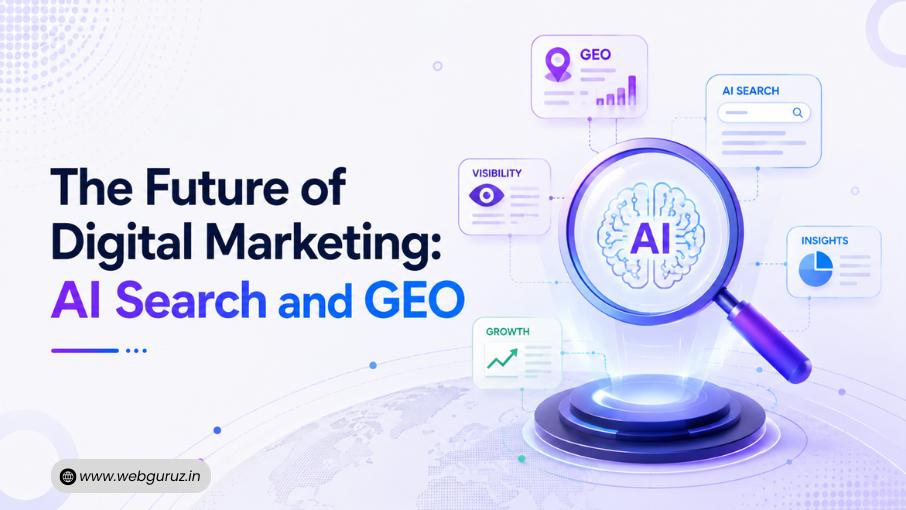
Something significant happened to digital marketing somewhere between 2023 and now, and it did not announce itself with a single headline. It arrived gradually, in the form of AI-generated answers replacing blue links, buyers asking ChatGPT instead of Googling, and brands discovering that ranking #1 on Google no longer guaranteed the visibility it once did. The shift is real, it is accelerating, and it is forcing every serious business to rethink what it means to be found online.
The good news is that the fundamentals of great marketing have not changed. Understanding your audience, building genuine authority, and showing up where your customers are looking, these things still matter enormously. What has changed is the infrastructure those fundamentals run on. The platforms, the formats, the algorithms, and increasingly the AI systems that now sit between a searcher’s question and the brands that answer it. Navigating all of that is what modern digital marketing services are built to do.
This piece covers where things stand, where they are heading, and (most importantly) what businesses need to do differently to stay visible in a landscape that is evolving faster than most marketing teams can keep up with on their own.
It is tempting to talk about AI search as something that is coming. It has already arrived. Google’s AI Overviews now appear in roughly 25% of all searches, nearly double what it was just twelve months ago. ChatGPT surpassed Bing in daily visitors by ten million back in 2024 and has not looked back. Traditional search volume is projected to drop 25% by 2026 as AI-generated answers replace link-based results for a growing share of queries.
What this means practically is that a brand can rank on page one of Google and still not appear in the AI-generated answer that most users see first and trust most. The click never happens. The impression registers somewhere in an algorithm’s training data, but the buyer has already moved on with a recommendation from an AI that did not mention you.
This is not a reason to panic. It is a reason to update the playbook, which is exactly what the best digital marketing agency teams are doing right now.
Before diving into what is new, it is worth being clear about what has not changed, because the temptation in a moment of industry disruption is to throw out everything and start over. That is rarely the right move.
Content quality still matters. Actually, it matters more than it ever has. AI systems are trained on the web, and they learn to trust sources that demonstrate consistent depth, accuracy, and expertise. A brand that has spent years producing genuinely useful content is better positioned for AI visibility than one that has gamed keyword density. The signal has changed; the underlying requirement for substance has not.
Technical SEO still matters. Fast pages, clean HTML, structured data, and mobile performance are not just Google ranking factors; they are the baseline requirements for AI crawlers that evaluate your content for citation eligibility. AI SEO services are built on exactly this foundation.
Authority still matters. Backlinks, brand mentions, third-party citations, and a consistent presence on the platforms that AI systems treat as trusted sources (Reddit, LinkedIn, industry publications) all feed into whether an AI system considers your brand citable. The currency is the same; the exchange rate has shifted.
What has changed is the unit of value. In traditional search, success was measured in rankings and clicks. In AI search, the unit of value is the citation, a mention inside an AI-generated answer that shapes what a buyer thinks and does, often before they have visited any website at all. Getting cited requires a different optimization mindset than getting ranked.
The surfaces have also changed. Buyers are no longer starting their research on Google and moving linearly to a brand’s website. They are asking AI assistants, watching YouTube reviews, reading Reddit threads, checking LinkedIn, and sometimes arriving at a purchasing decision without visiting a single company website directly. Search everywhere optimization (the practice of building a brand presence across every platform and surface where your audience is searching) has gone from a nice-to-have to a strategic necessity.
And the speed of change has changed. Algorithm updates used to arrive a few times a year. AI-driven shifts in search behavior are happening monthly, sometimes weekly. Staying visible now requires not just a strategy but an adaptive capability, teams, and tools that can monitor, respond, and optimize continuously.

Generative Engine Optimization (GEO) is the discipline of structuring and positioning content so that AI-powered search engines cite it in their responses. It is the fastest-growing area of search marketing, and the numbers reflect it: the GEO market was valued at $848 million in 2025 and is projected to reach $33.7 billion by 2034 at a 50.5% compound annual growth rate. That is not gradual adoption; that is a channel breakout, and first movers are already compounding advantages that will be increasingly difficult for late entrants to close.
Working with a Generative Engine Optimization agency that understands this landscape is fundamentally different from working with a traditional SEO provider. GEO requires content that is structured for extraction, clear headings, direct answers, named authorship, verifiable data, and the kind of specificity that allows an AI system to cite a source with confidence. It requires understanding which platforms are generating citations in your category and which content formats are being surfaced. And it requires a measurement framework that goes beyond traffic and rankings to track brand mentions inside AI-generated answers, a relatively new capability that the best AI SEO solutions providers have already built into their reporting.
The answer engine optimization services address a specific and growing layer of search behavior: the direct question. Voice search, featured snippets, and conversational AI interfaces all share one characteristic: they are looking for a clear, direct answer to a specific question, not a ranked list of pages to choose from.
AEO is not a replacement for GEO or traditional SEO. It is a complement, one that targets the immediate-intent moments when a buyer has a specific question and wants a specific answer. The brands that have invested in FAQ-structured content, schema markup, and the kind of authoritative, concise answers that AI systems love to surface are seeing disproportionate visibility gains in this layer of search.
Both GEO and AEO sit within a larger framework that the best digital marketing services teams are now building around: Search Everywhere Optimization SEO the practice of building genuine brand presence across every surface where discovery happens.
This means your website and blog, but also your YouTube channel, your LinkedIn presence, your appearance in industry publications, your management of Reddit conversations in relevant communities, your Google Business Profile, and your appearance in podcast transcripts that AI systems index. Each of these surfaces contributes to the overall picture that AI systems build of your brand, and the more coherent and authoritative that picture is across platforms, the more likely you are to be cited when a buyer asks a question in your category.

The conversation about AI in marketing tends to focus heavily on search visibility, and rightly so, given how much the landscape has shifted. But the impact of AI integration services on marketing operations goes much further than how you rank or get cited.
AI is now doing meaningful work inside the marketing function itself. Content production, audience segmentation, campaign optimization, lead scoring, and personalization at scale, all of these are being transformed by AI tools that are either embedded in the platforms marketers already use or available as standalone layers on top of existing workflows. Salesforce’s State of Marketing 2026 survey of nearly 4,500 marketers found that 75% now use at least one form of AI (predictive, generative, or agentic) in their day-to-day work.
The businesses getting the most value from this are not the ones that have deployed the most AI tools. They are the ones that have integrated AI thoughtfully into the specific workflows where it genuinely reduces friction or improves output quality, with human oversight where it matters, and with clear measurement of what the AI contribution is actually producing. AI solutions for businesses in a marketing context work best when they are tied to a clear strategy, not deployed as a collection of individual tools that each solve a different problem in isolation.
This is the question that every conversation about the future of digital marketing eventually arrives at. The theory is useful; the budget decisions are where it becomes real.
The short answer is that the allocation logic needs to change. Marketing budgets that were heavily weighted toward paid search (paying for clicks in a system where the organic real estate is shrinking due to AI Overviews) need to shift some of that investment toward earned visibility. Content that earns citations. Authority-building that makes AI systems trust your brand. Presence on the platforms that feed into AI training and retrieval.
This does not mean abandoning paid channels. Paid search, paid social, and display advertising still play important roles in the marketing mix, particularly for capturing immediate-intent buyers and retargeting warm audiences. But the ROI logic is shifting. Organic visibility through AI citation is proving to be a higher-quality, more durable form of awareness than paid placement that disappears the moment the budget does.
There is an uncomfortable truth about AI search marketing that deserves more attention: most of the value it generates is currently invisible to standard analytics tools.
When a buyer asks ChatGPT which CRM to use for their real estate business, and your brand appears in the answer, and they later visit your website through a direct search, your analytics platform records a direct visit. It has no idea that the buyer’s awareness of your brand was created by an AI citation three days earlier. The attribution gap is significant, and it is distorting how many businesses evaluate their investment in AI visibility strategies.
The GEO market’s own data reflects this: 54% of marketers say they plan to invest in measuring AI search visibility, but only 23% are currently doing it. That gap (between intention and execution) is where competitive advantages are being built right now, because the brands that build measurement frameworks today will have compounding data advantages over the ones that start twelve months from now.
Closing this measurement gap is one of the core things that a sophisticated AI SEO services partner should be helping you with. Brand mention tracking across AI platforms, share-of-voice measurement in AI answers, and the correlation analysis that connects AI visibility to downstream revenue, these are not optional extras. They are the analytics infrastructure that makes AI marketing investment defensible and improvable.

For businesses that understand the landscape and want to know what to actually do, the starting point is an honest audit of where you currently stand across the layers that matter.
Are you appearing in Google AI Overviews for the queries that matter most to your business? Are you being cited by ChatGPT or Perplexity when a buyer asks a question in your category? Do you have a meaningful presence on the platforms (LinkedIn, YouTube, industry publications, Reddit communities) that AI systems treat as authoritative sources? Is your website technically clean enough that AI crawlers can access and understand your content without friction?
Most businesses that do this audit discover a significant gap between where they thought they were visible and where they actually are in the AI search landscape. That gap is the starting point for a strategy, and closing it is the work that good digital marketing services exist to do.
The future described in The Future of Digital Marketing Services: AI Search, GEO, and What Comes Next is not ten years away. It is the environment businesses are operating in right now. The brands that treat it as a reason to update their strategy (rather than wait and see) are the ones that will be most visible to the buyers of 2027, regardless of what those buyers are using to find them.
Digital marketing has always rewarded businesses that understood the current moment clearly enough to act on it before their competitors did. The current moment is an AI-driven redistribution of search visibility, one where the brands that earn authority, build cross-platform presence, and structure their content for AI citation are pulling ahead, while those still optimizing exclusively for traditional blue links are quietly losing ground.
The technology is new. The principle is not. Show up where your customers are. Be genuinely useful when they find you. Build the kind of authority that makes you the obvious answer, whether that answer comes from a search engine, an AI assistant, or a trusted peer. That is what digital marketing services in 2026 are designed to help you do.
GEO is the practice of optimizing content so AI tools like ChatGPT, Gemini, and Perplexity can find, understand, and cite your brand when answering user questions.
Absolutely. Strong SEO remains the foundation of online visibility. AI search builds on many of the same signals, including content quality, website authority, technical performance, and trustworthiness.
A RevOps Agency partThis requires specialized tracking tools and visibility audits. Many businesses are surprised to learn that they rank well in search engines but rarely appear in AI-generated responses.
It’s a strategy that expands your visibility beyond Google by building authority across platforms like LinkedIn, YouTube, Reddit, industry publications, and other places where buyers research solutions.
Yes. While the core principles of marketing remain the same, businesses need to adapt their content, authority-building efforts, and measurement strategies to remain visible as AI becomes a primary discovery channel.
Vedanshi
2026-10-23
7 min read
Your business uses HubSpot to manage customer relationships, but disconnected systems create data issues.
Read More
Vedanshi
2026-10-22
7 min read
Ask ChatGPT, Gemini, or Perplexity to recommend a supplier or a software tool, and you get a short list of names, not ten blue links.
Read More
Vedanshi
2026-10-21
7 min read
Building a website takes more than picking colors, dropping in images, and writing copy.
Read More